It’s time for Ratatouille! …have I got the spelling right??

…Umm, here we go again!  For those of you who saw this as a ‘mini-post’ a few hours ago, you must have been thinking ‘so where the heck is that recipe then?’.   Well, I was in a hurry to pick up our child from school and WHOOPS pressed the ‘publish’ button instead of ‘save draft’.   I’ll give it another try.

As for the spelling  …well yes, I checked in the cookbook.  It’s one of those words, like ‘rhythm’ or ‘Mediterranean’… I always have to think twice about it or look it up!

So here is my version of a ‘Rattatooey’ (that’s how I pronounce it, causing grimaces all round I’m sure) – a very traditional French dish that for me, unlike any other dish, evokes Summer in the South.  The colours of the ingredients are sublime and just thinking about cooking it conjures up images of potagers (vegetable patches), big cast-iron casserole pots simmering on country kitchen stoves, lashings of fresh basil and chilled French wines.  Many households are cooking up this dish right now and on my visits to friends’ houses I love nothing more than peeking into their pots to see what theirs look like.  Vegies cut big or small? Diced or sliced??  Oily, not so oily?  Fresh tomotoes, tinned?

I say ‘my’ version as yes, there are many.  The ingredients are almost always the same, but the cooking methods differ.  I’m a little embarrassed admitting that mine has conserved tomatoes in it instead of fresh, but it has.  A good friend of ours came to stay this Summer (more of him in later posts) and being the most wonderful cook he is (and being French, I must also add) I was eager to get his opinion on what the ‘correct’ way to prepare this is.  Strike out!  He insisted the tomatoes had to be fresh.  Ohh, I thought to myself, now I feel unworthy.  Oh well.  It’s always tasted good to us and what’s the point in arguing with this Frenchman, whose opinions on cooking and wine I admire so much.

I should add that my two of my  favourite references for cooking are Stephanie Alexander’s ‘The Cook’s Companion’ and Susan Herrmann Loomis’s ‘French Farmhouse Cookbook’ and I first accessed this recipe from their reassuring pages.   They were both wedding presents and how many times did I think to myself in those early days as a mute-non-speaking the local language-housewife with her apron – ‘where wold I be with out you??!??’   Well I must say that neither of their versions use conserve/ tinned tomatoes either!

Our friend did have a little extra advice for me too.  On his departure, he mentioned that during the vintage I should be preparing many good meals for my husband, be kind and – with a wink –  be a ‘bonne femme’.  What did he mean?  Did he really mean the housewife variety relegated to her stove or being simply good to Him?  In the kitchen, elsewhere? (now don’t go there…).  Mais merci, I’ll take that on board.

Incidentally, in  French, ‘bonne femme’ could be either ‘good woman’ or ‘good wife’ – it’s the same term for both.  For the blokes however, there’s no such confusion as husband has its own word – ‘mari’.

I’m beginning to think we’re all destined to be good housewives here! (in the countryside anyway, if not the towns).

Anyway, here’s my recipe, minus the fresh tomatoes, from one Bonne Femme to you!

‘Ratatouille’

With these quantities, you can serve this to 6-8 people and still have left-overs.

This is one of those dishes that just gets better and better on the second and third days.  Ideally, I make this the night before serving.
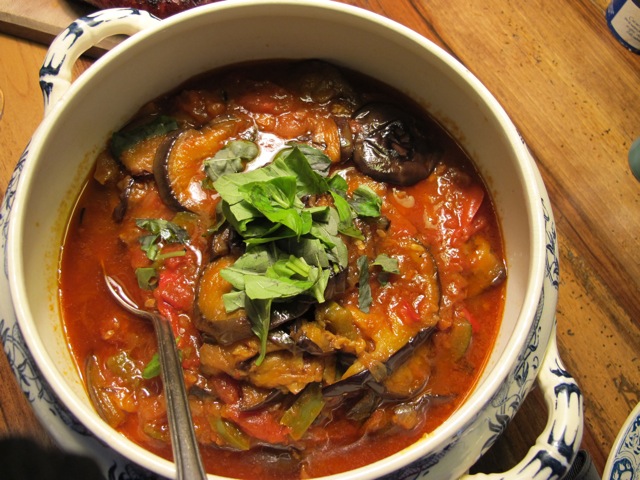
ratatouille
ratatouille

Ingredients:

(I change my portions each time, according to how it looks in the pot, so these quantities can be varied according to your taste)

4-5 medium onions, sliced (I love them!)

5 cloves garlic, finely chopped

4 eggplants, sliced

8 zucchinis, sliced to 1cm thickness

3-4 capsicums (that is, peppers or poivrons, depending on your country!) – green, yellow and red, seeded and sliced

1 x 690g bottle crushed tomato pulp (you may not want to pour all of it in)

2 x 800g tin tomatoes

salt, pepper

olive oil, sunflower oil for frying

chopped parsley and torn basil

method:

Cut the eggplant into 1cm (or finer if you like) slices, place the slices in layers on a large tray, sprinkling salt over each layer.  Cover with tin foil, weigh down with a heavy book and leave for one hour.

Heat up a generous amount of oil in a large cast-iron casserole/ heavy-bottomed pot and fry the onions over medium-low heat until soft and golden.
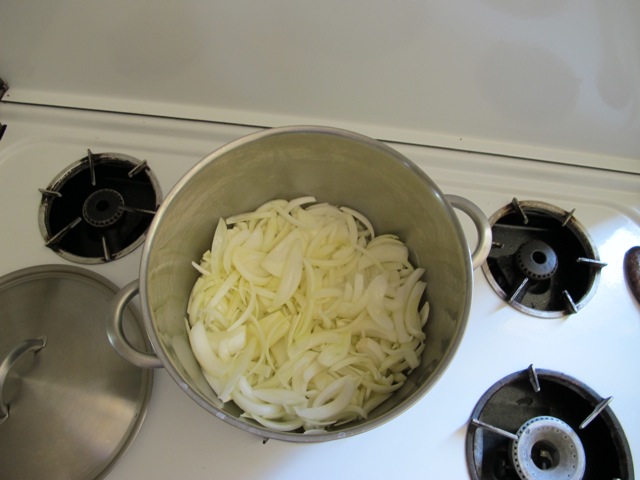
a lotta onions
I love onions

While the onions are frying,  seed and chop capsicums, chop zucchinis, chop garlic.

'tricolore' de poivrons
a ‘tricolore’ of capsicums

As the onions become soft and golden, add the capsicum and the garlic and stir well.  Increase heat to medium-high, stirring frequently to mix the ingredients.

Lower heat, cover with lid.  Cook for further 15 minutes.
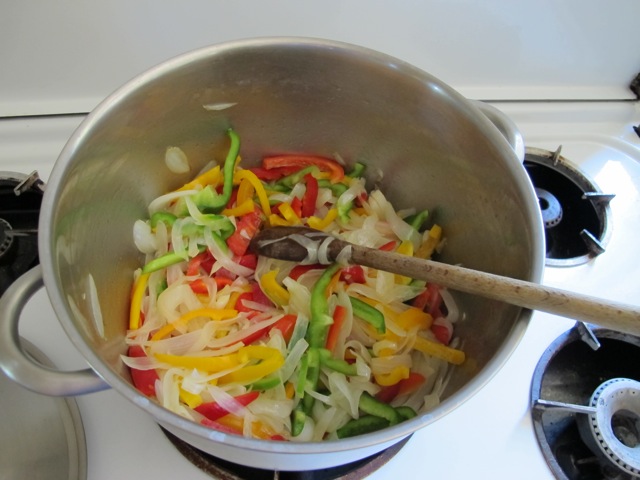
onions and capsicums

During this time, rinse the eggplant slices, drain through a colander and pat dry with tea towels.

Prepare one or two fry pans for  shallow frying eggplants with generous amount of blended olive oil/ sunflower oil in each.

Stir in the tomatoes into the pot.

tomatoes added

Stir in zucchinis to the pot, add freshly ground pepper and continue simmering with lid on.

Over a high heat (watch that the oil doesn’t burn) fry the eggplant slices until golden, re-adding oils to the pan/s regularly.  This step is one of the most time-consuming in this recipe, but I really think it makes a difference to the dish. Once slices are cooked, I lay them aside on paper towels on a large tray.

Please note: I don’t salt the pot until I’ve tasted it with the eggplant added – even if the eggplants have been well-rinsed there can be a residue of salt.
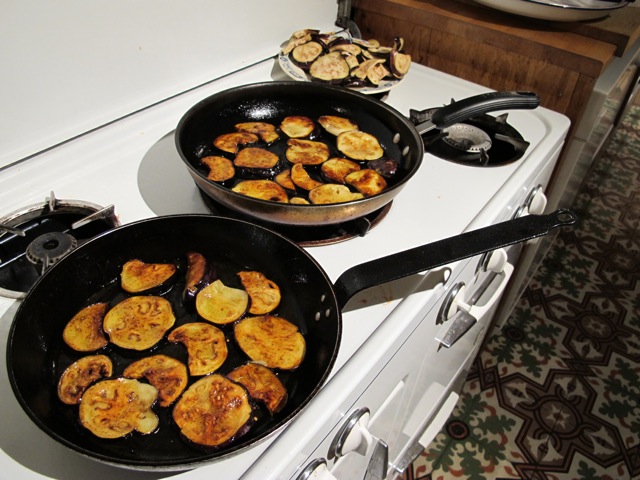
frying the eggplant
Using two fry pans can reduce the time spent over the stove!

Once all the eggplant slices have been fried, I add them to the pot, taste for salt and then re-cover and leave simmering for another 20 minutes.
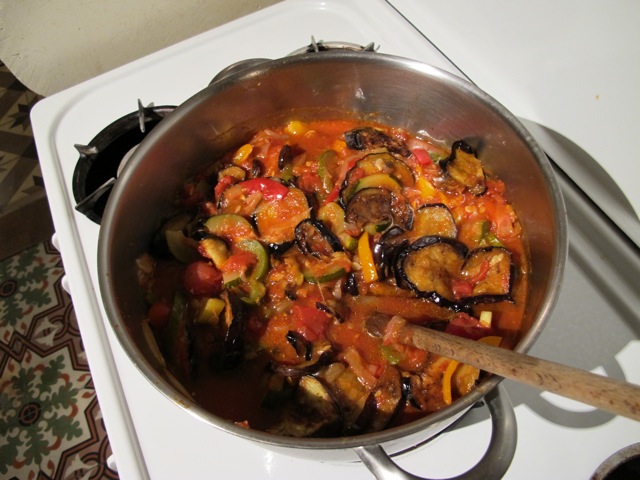
almost there with the ratatouille

Serve cold, warm or hot the next day with torn basil leaves and freshly chopped parsley.

This is a great side dish for bbq’d meats – especially lamb.  It also goes very well with country sausages.
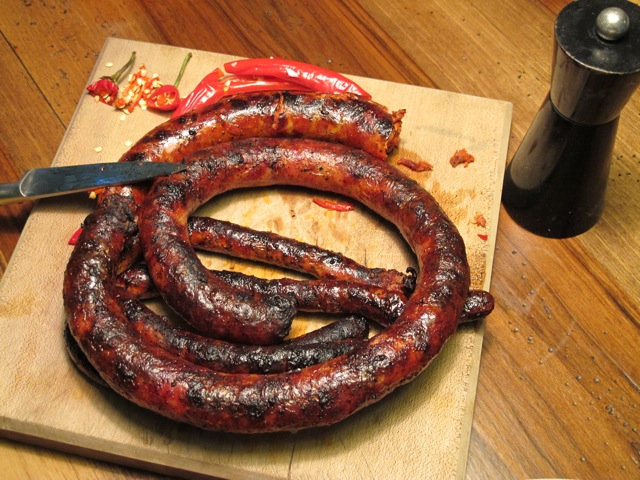
barbecued country sausage

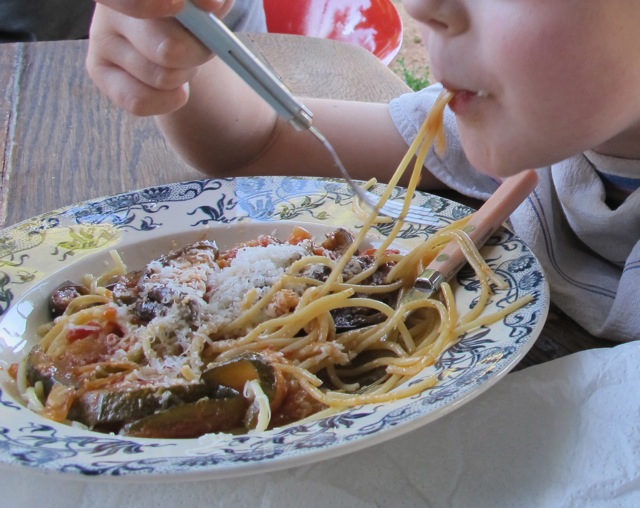
We also enjoy serving left-over ratatouille as a pizza base or tossed through pasta – it’s a delicious mix with spaghetti or fettuccine, sprinkled with basil and parmesan. 

It’s a great way to get Lilas to eat her vegies!
ratatouille spaghetti

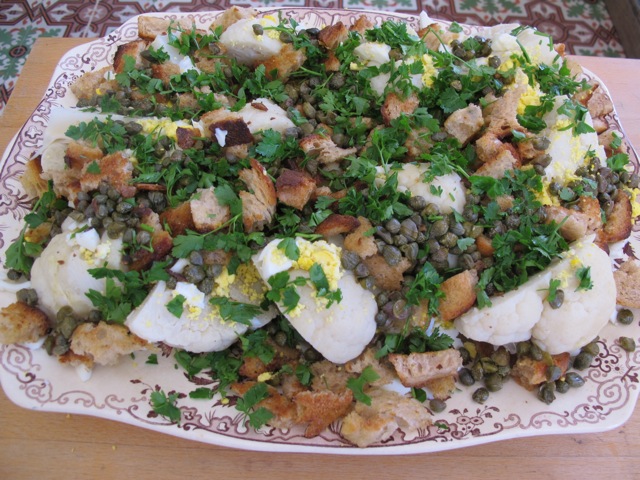
a very simple cauliflower dish

Cauliflower Polonaise
a very big version of the ‘Cauliflower Polonaise’

This has to be one of our all-time favourites and is so ridiculously easy to make!   The combination of flavours with the simple cauliflower base is completely moreish (especially if you’re a salt lover like me).

It wasn’t until I moved to France that I started eating so much of this vegetable.  At home my parents didn’t really serve it – note: we DID actually eat vegetables at my parents’, and not just the frozen variety either, just in case you were thinking ‘ahh, those Aussies with their chops and three frozen veg’…  But I remember it well at one of my best-friend’s mum’s…  She would always serve ‘cauliflower cheese’ with a family roast and we’d all fight over it.  But these were probably the only times I ate it. In France my husband’s family eat it regularly and eat it as an entree or sidedish, boiled or steamed and then served with a vinaigrette poured over the top and chopped parsley.  This recipe isn’t very different to this, just a few more flavours and time in preparing each ingredient.  It comes from one of the queens of cooking in Australia, Stephanie Alexander, in her brilliant ‘The Cook’s Companion’.  When Benjamin and I first moved to France this was one of the only two cookbooks we brought with us on the plane (and you should see how big the book is), and I can’t believe how helpful it’s been, all this time.

We eat this as an entree, or to accompany a BBQ.   And it is amazing as left-overs the next day or two (if you’re anything like me and love to eat food upto a week after it’s been in the fridge.  Parents from the Depression and their influence!!..)

‘Cauliflower Polonaise’ (from Stephanie Alexander) – serves 4 with these quantities, but I tend to always double it!

ingredients:

1-2 cauliflower

2 hardboiled eggs (no time for arguments!)

2 tablespoons fresh breadcrumbs

40g butter

oil or butter for frying the capers

1 tablespoon freshly chopped parsley

salt

freshly ground black pepper

Oh, and I almost forgot: a small cup of home-made vinaigrette (I have added this to the recipe as I like it moist!)mustard, lemon juice, salt, pepper, red-wine vinegar, olive oil

method:

Steam cauliflower, section it up  and then put aside on a serving dish.  (You may like to prepare all the ingredients ahead, so that the dish is served hot or warm, or otherwise serve at room temperature).

Shell the eggs, and separate the yolks from the whites (my husband thinks I’m nuts every time I insist on doing this).  Chop up the whites and then crush the yolks with the back of a fork, keep apart in bowls for later.

In a frying pan, toss the breadcrumbs in the butter, always tossing to avoid them burning.  I like my mix to have larger crouton-sized chinks as well as crumbs, so maybe do the chunks forst and then add the crumbs at the end.  Fry until very golden.

Drain and then fry the capers in some oil or butter until they open.

Scatter ingredients over the cauliflower in this order – egg whites, yolk, breadcrumbs/ croutons, capers and then the parsley.  Pour over with vinaigrette… et voila!

allo allo – an update from the vines #2

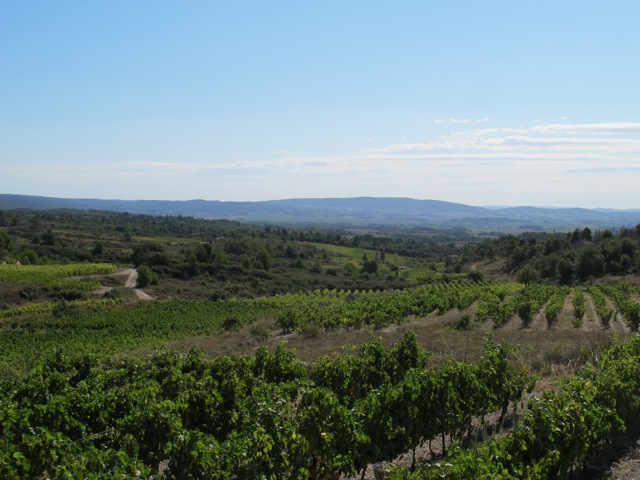
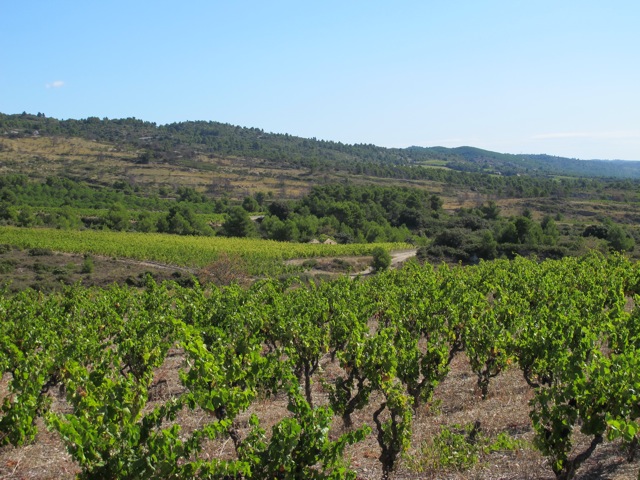
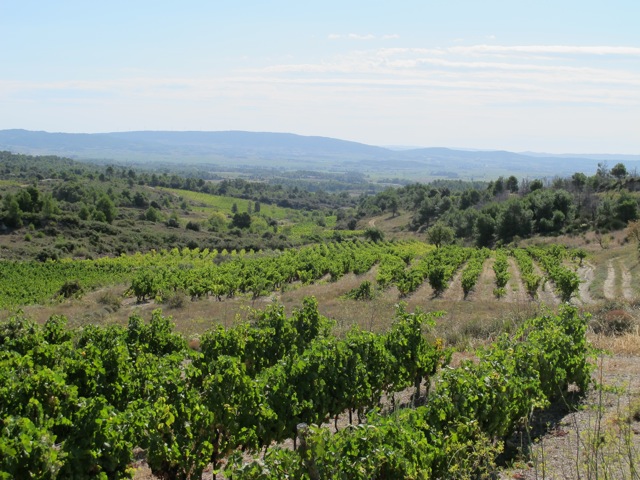
happy vines in the Minervois
Happy vines in the Minervois, as far as the eye can see

It looks like the weather has very much picked up:  it’s sunny and blue-skied with cool, northerly winds to help dry out the vines.  The nights are fresh and the days warm and it’s forecast to stay like this for the week (we have the ‘meteo’ info on the computer here, updating 24/7!) which makes for a happy vigneron in the house.

This morning was particularly beautiful and there was a wonderful hum in our area today – of expectation, new starts and industry.  The sky was clear, children all went back to school and many of the grape growers were beginnng their harvest.

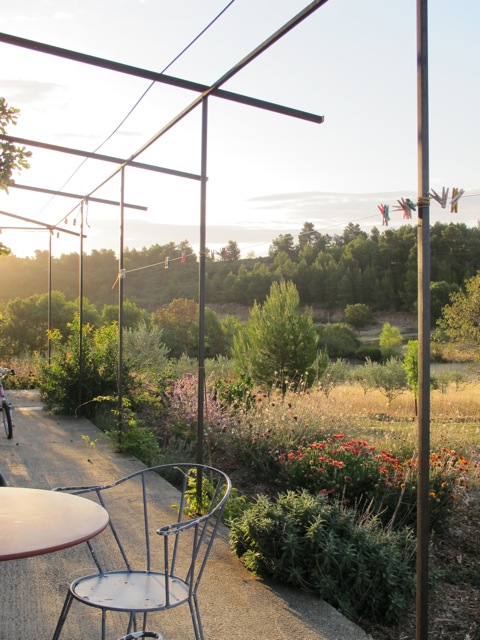
our garden this morning
The weather's going to be fine today!
our apple tree
our apples are ready for the picking
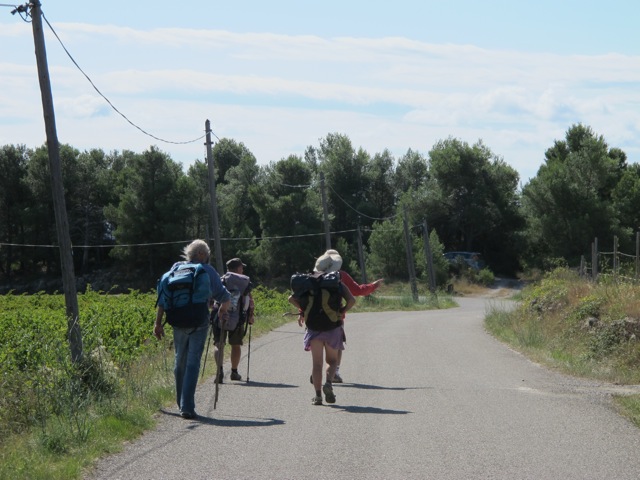
happy walkers
happy walkers

I can’t begin to tell you how much the atmosphere changes around here once people begin to pick their grapes.  A whole year’s work and energies culminate in this event and the villages are charged with excitement.

As for any farmer about to harvest, the weather reports are extremely important at this time of year.  Any dodgy behaviour – hail, rain, extreme heat – can disturb or destroy the whole year’s work.  Stressful times indeed, until all those babies are in, safe in their presses or tanks.

I’ve often pondered this while picking grapes (and how much time you have to ponder!) as looks of stress etched themselves on Benji and his vineyard managers’ faces as the skies filled with ominous storm clouds.  But for me, these ideas of vulnerability for the poor grapes were quickly erased by the more exciting idea of ditching secateurs and having the rest of the day off.  Maybe even the next day off too!  Outrageously WRONG!!!

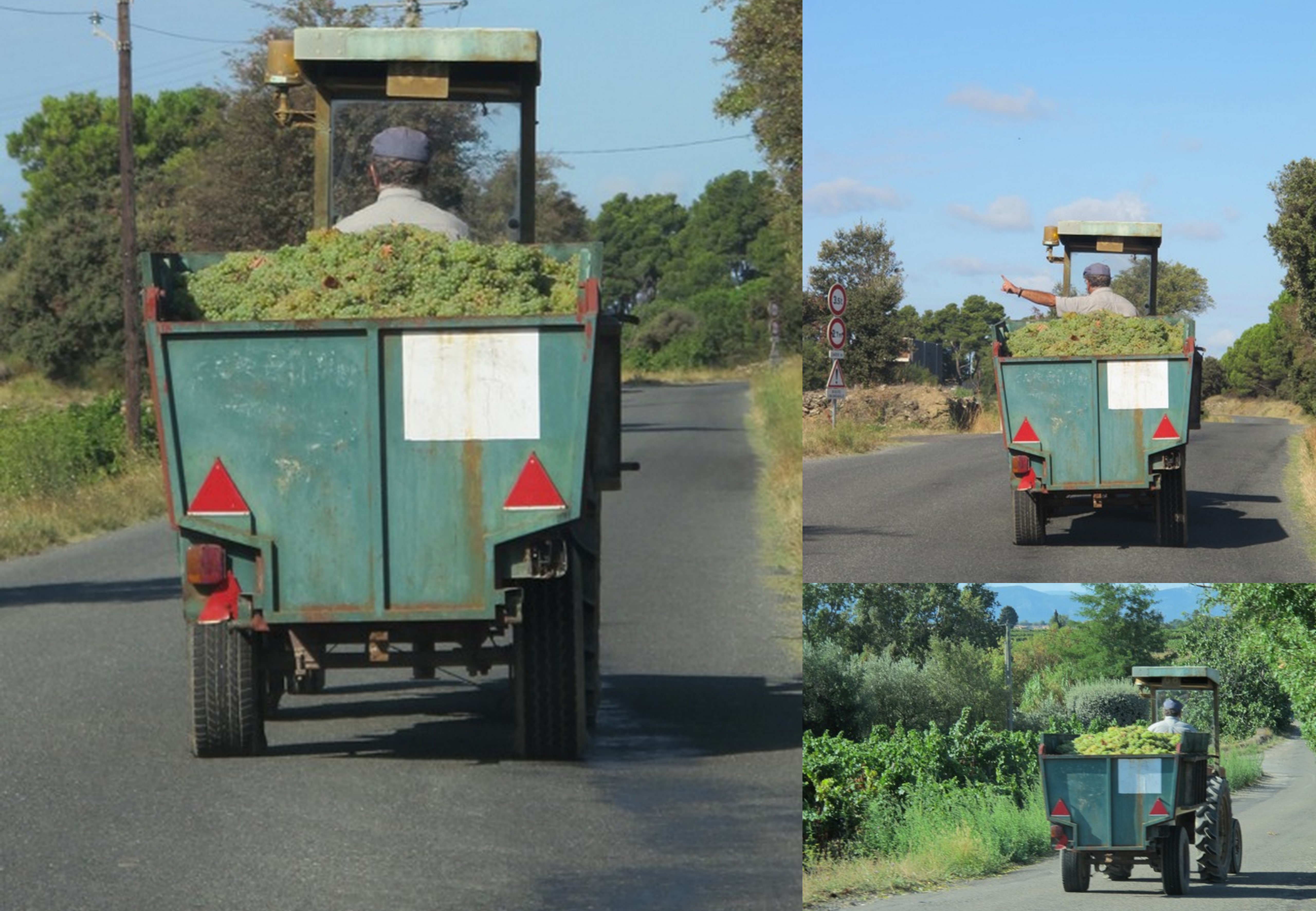
It wasn’t until I was following a small tractor today, loaded with white grapes, that I fully understood the joy for the growers finally taking their kiddies to their cellars.

off to the cave with the white grapes
following a tractor heading back to the cave with a load of white grapes

Bring on the harvest!

happy vines in the region

Minervois vineyards

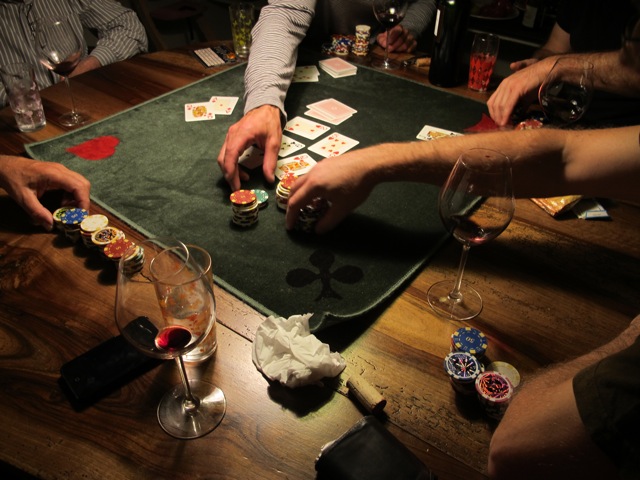
what the poker men drank…

no, he didn't win!?!!
up for grabs, but he didn't win!??!!!!

So no, he didn’t win.  Big shame as I was doing the food shopping the next day.  Ah, the trails of a housewife…

They got through a few bottles between them though!  Please note, that all comments on the wines however, are mine!  Even if I wasn’t playing, the wife does get to try the vino!

Here’s the damage:

Chateau Maris Rose 2010

Chateau Maris Rose 2010
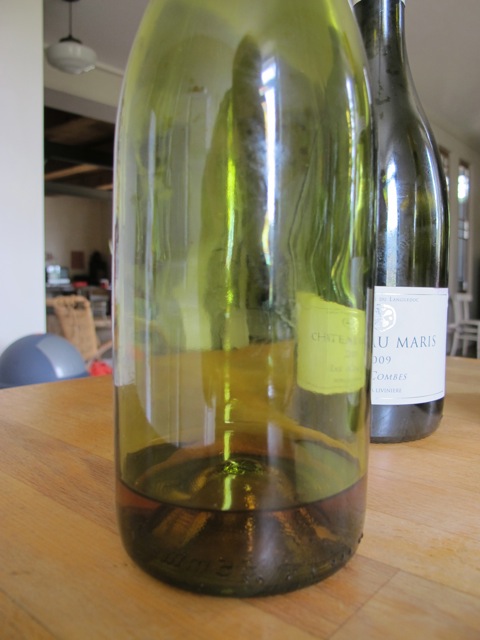
There's no label, but this is the left-overs of this delicious Chateau Maris Rose 2010, made from 100% Cinsault (a grape that grows very well in our region, the Langedoc Roussillon). This grape variety is the fourth most planted in France!

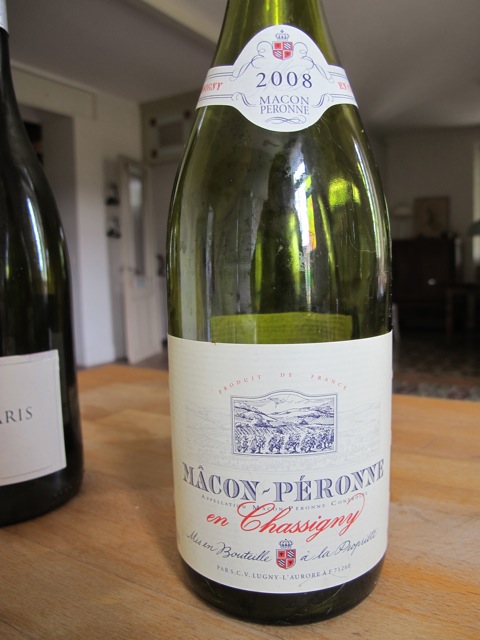
Macon-Peronne en Chassigny 2008

Macon-Peronne en Chassigny 2008
Macon-Peronne en Chassigny 2008: nice to try this Burgandy, but I thought it was a bit flat. Sorry guys!

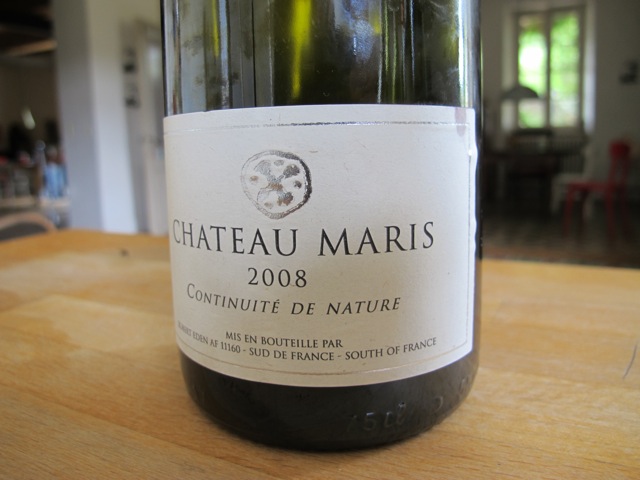
Chateau Maris ‘Continuite de Nature’ 2008

chateau maris carignan 2008
Chateau Maris 'Continuite de Nature' 2008: yes, you've seen this one before. One of our absolute faves at the moment and tasting well everytime.

Chateau Villerambert Julien Minervois Rouge 2004

Chateau Villerambert Julien 2004 Minervois
Chateau Villerambert Julien 2004 Minervois: a very old family winery dating back a few generations, in Caunes-Minervois, one of the most picturesque villages around here, known also very well for its 'Caunes marble' - a rich, deep pink/ochre colour streaked with white. I think this is a syrah/ grenache blend and was enjoyable but the wood a little too strong.

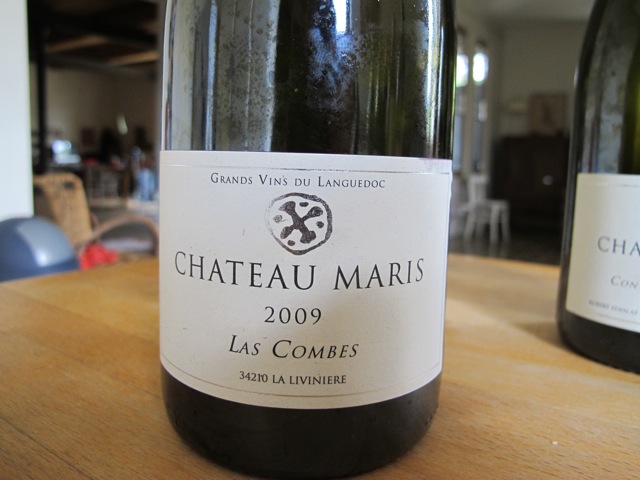
Chateau Maris ‘Las Combes’ 2009

Chateau Maris 'Las Combes' 2009
Chateau Maris 'Las Combes' 2009: one of Benji's again... a great, 100% old vine grenache (yes, the grenache, but under a different guise). Gorgeous nose and fragrant.

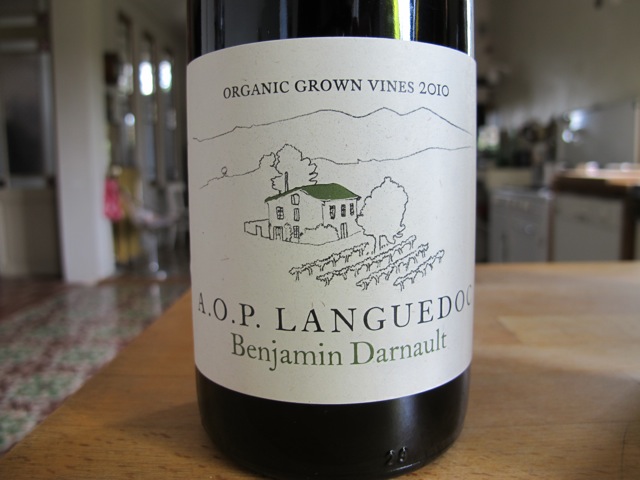
Benjamin Darnault AOP Languedoc 2010

Benjamin Darnault AOP Languedoc 2010
Benjamin Darnault AOP Languedoc 2010: a wine from the Naked range. A delicious organic 'big' red from St Chinian. One of my favourite apellations.

There you have it.  If it sounds like I’m biased towards Benji’s reds, it’s correct!  But please be aware that I am very open-minded when it comes to tasting all the wines.  It just happens that I tend to enjoy his.  Fortunate that!