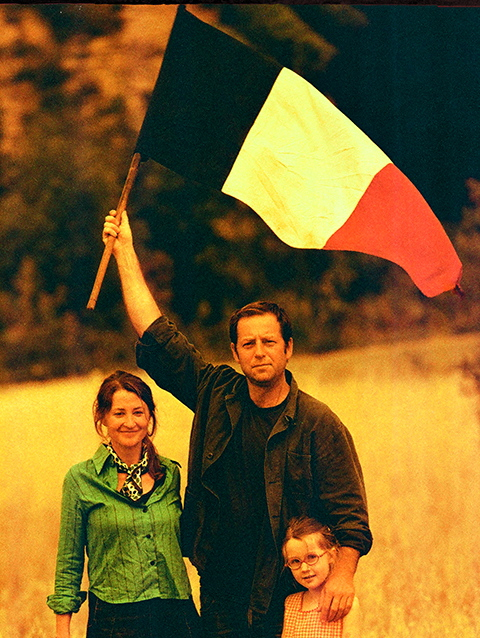
Phew, it was so damn close. Only 12 votes in it, but he came through! Allez le frog.
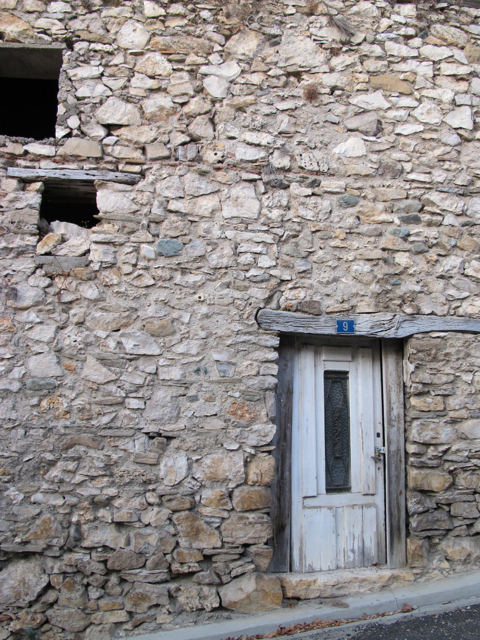
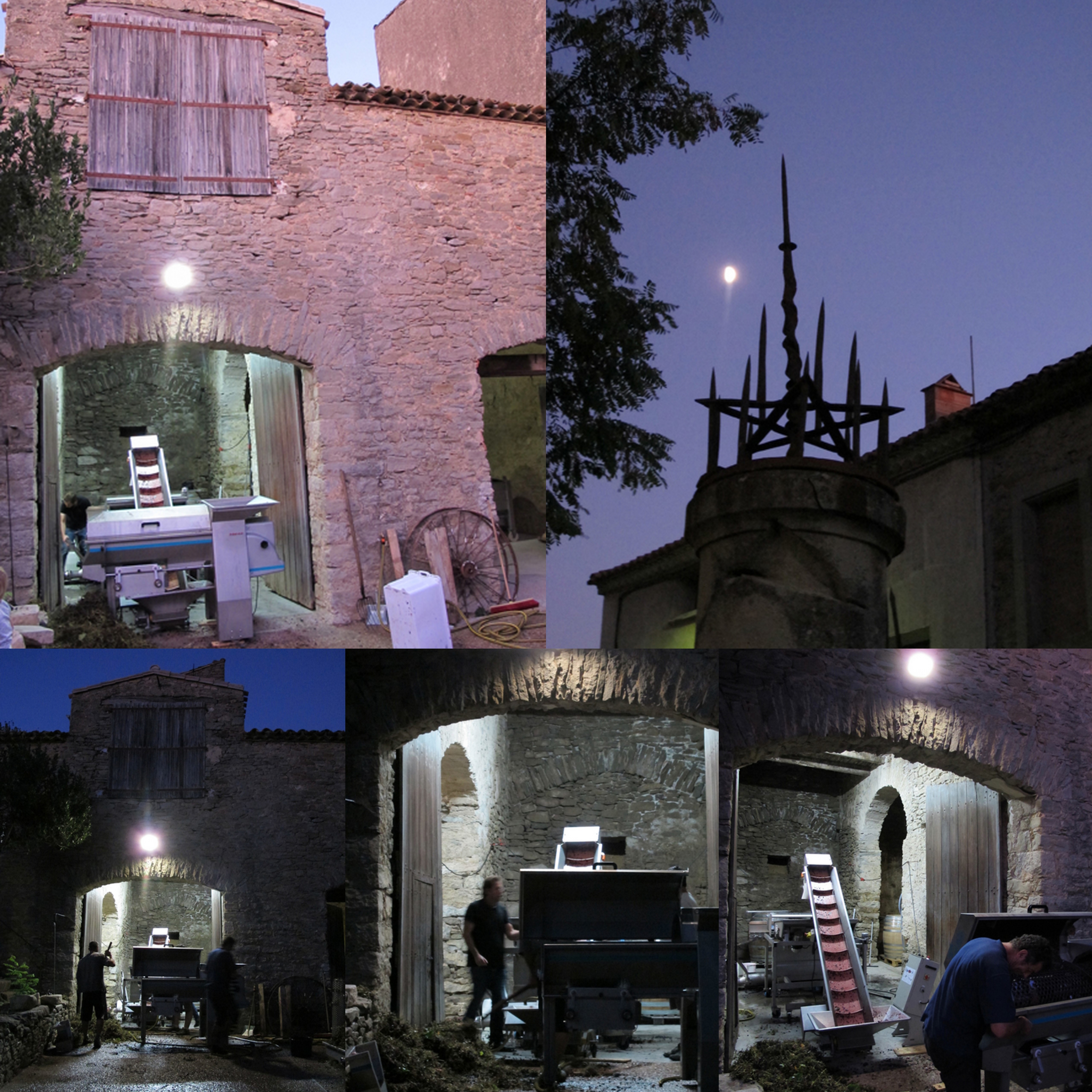
It all happened here!
After all this excitement I need to add a few more little bottles to the ‘drinking’ section! I’ll keep you posted.
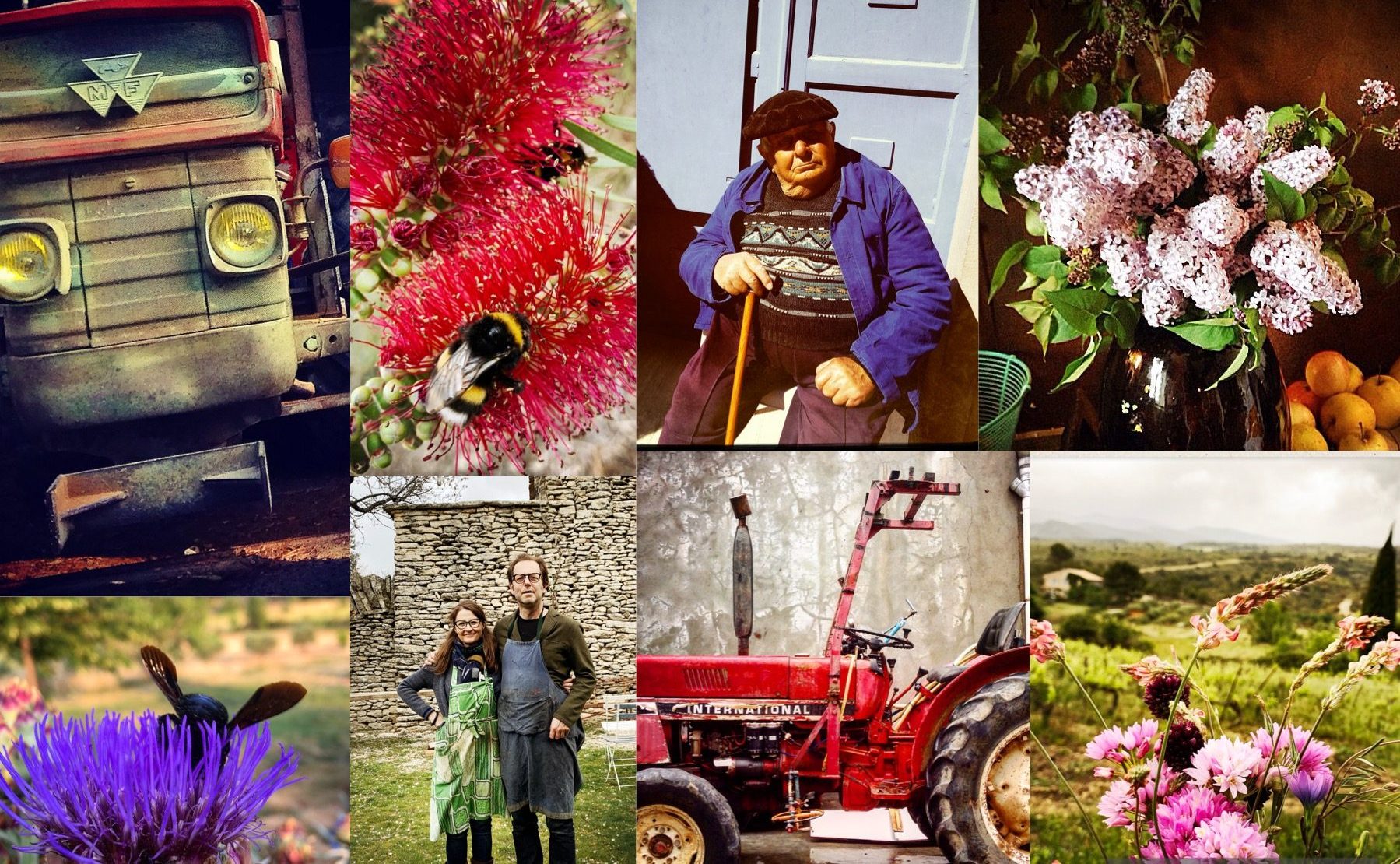
don’t you just love it!
Phew, it was so damn close. Only 12 votes in it, but he came through! Allez le frog.
It all happened here!
After all this excitement I need to add a few more little bottles to the ‘drinking’ section! I’ll keep you posted.
A little tiny plug for the Vigneron…
Voting ends today for the Naked Winemaker of the Year competition and he’s not too far behind! (only a couple of hours to go). The suspense is kiiling me!! (look I’m so nervous I can’t type properly!)
Go Benji Go!
and p.s. Go for gold and vote ‘1’ for Benji!
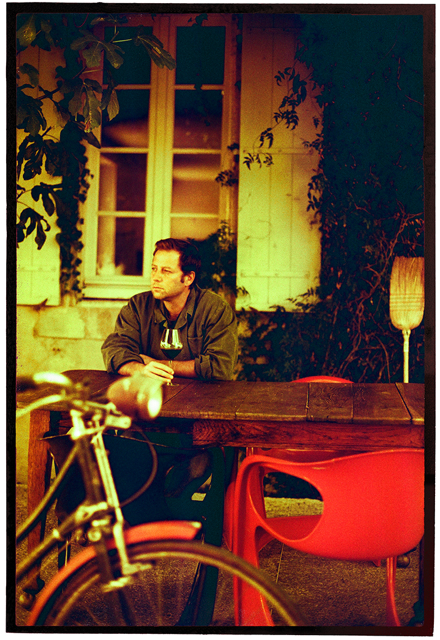
Here’s a pic of him taken by our friend Vincent (tres serious Benji). Lovely shot but a bike, the broom??… didn’t know he used either!
a peak into this week in the Minervois!…
We’ve had a public holiday and lots of time for exploring and catching up with friends and family (the Frenchie side. But I’m counting down the days to catching up with the Aussie one!).
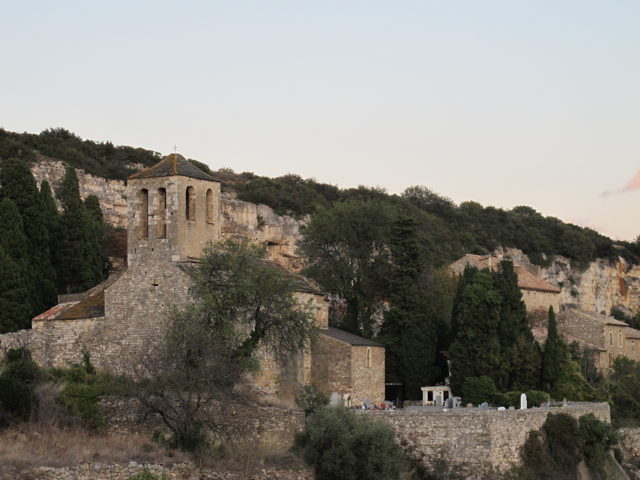

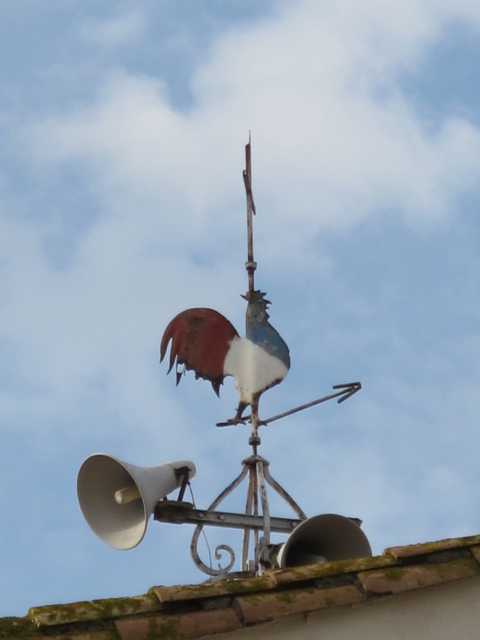
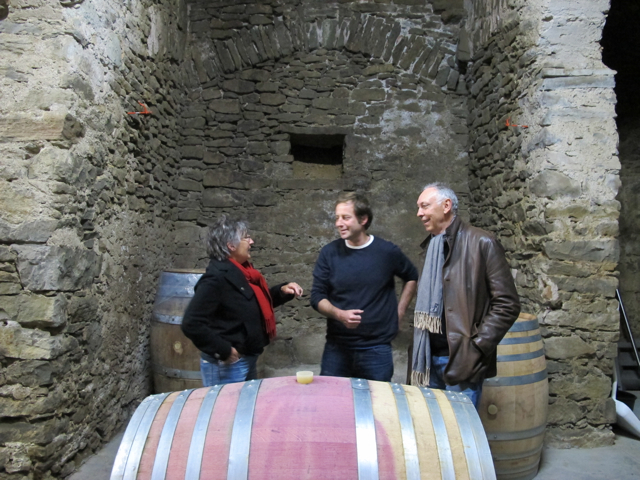
We had a visit from winemaking friends from Australia, Elva and Ron Laughton of Jasper Hill. Benji showed them around the cellar in the village. Thanks for the visit and the Roquefort guys…
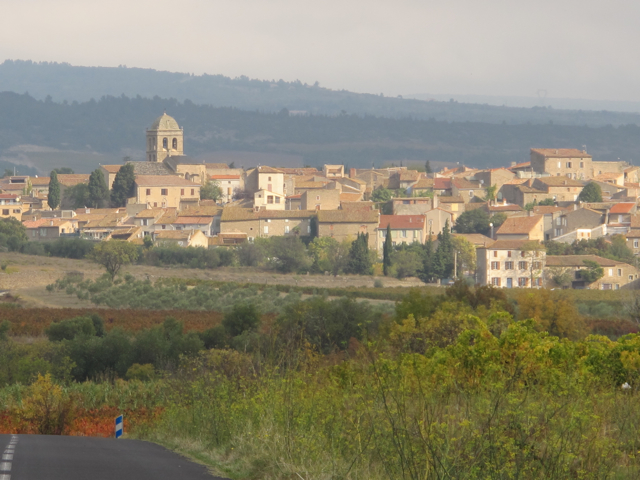


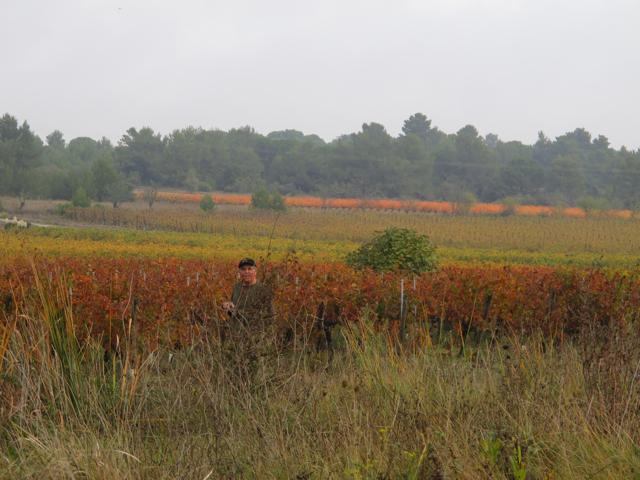
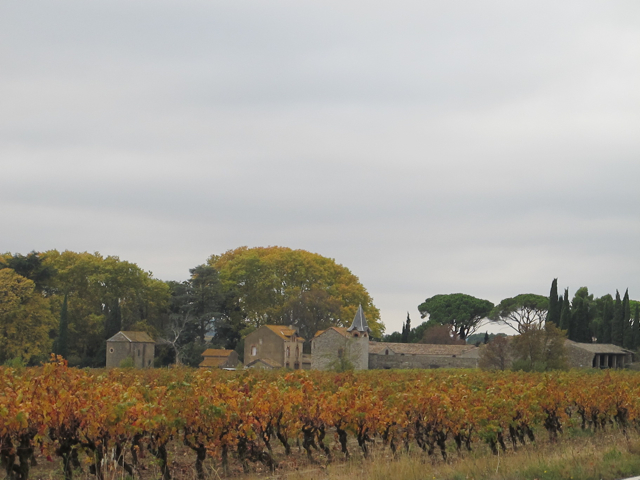


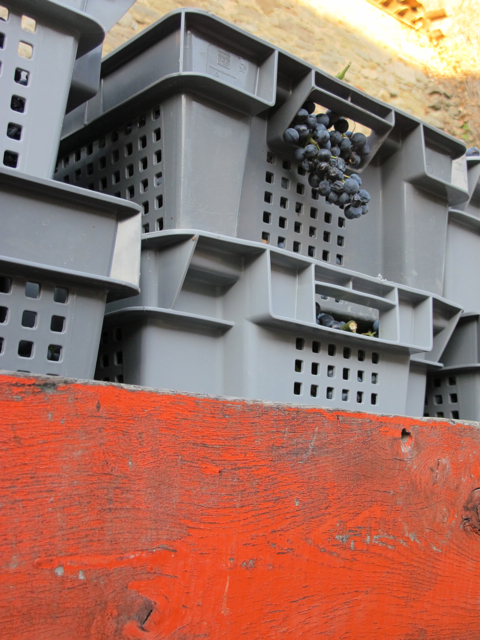
Well that’s it for picking this year. All the grapes are in, busy fermenting, creating heat in the tanks and Benji can breathe a sigh of relief. We’ve had good amounts of sunshine and wind, no hail, no rot – now it’s time to leave the grapes to do their stuff in the winery and see what sort of juices evolve.

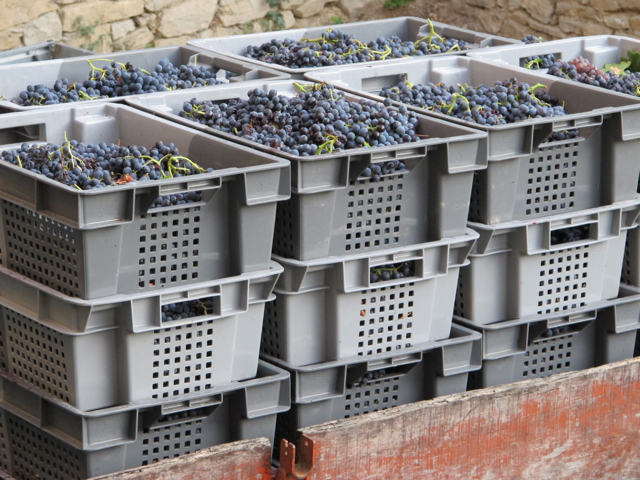
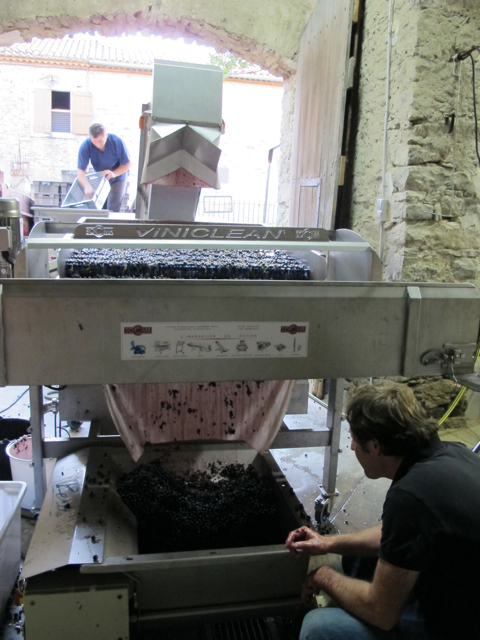
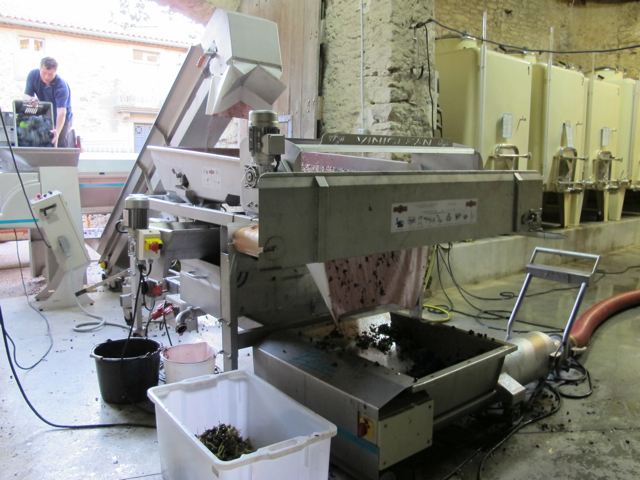
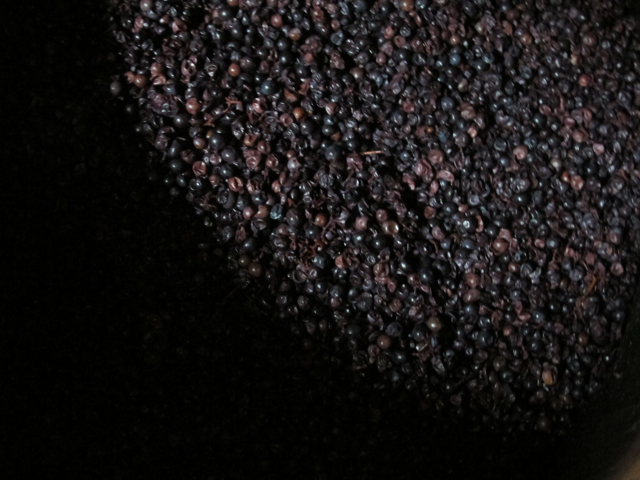
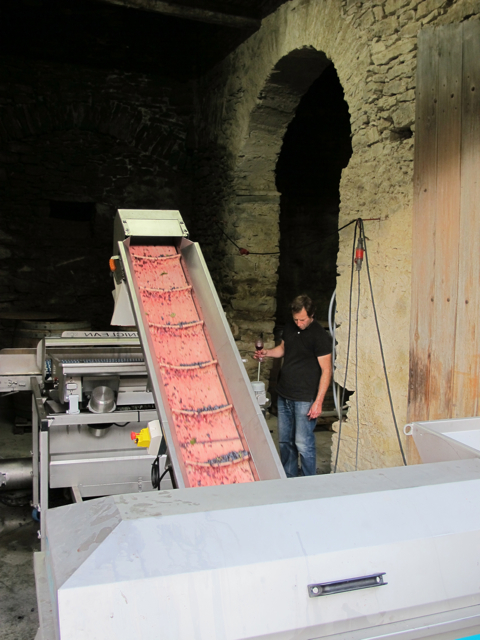
These photos show the last of the grapes from the harvest – the Grenache – coming in. We hung around for a couple of hours to see the action. It might sound nerdy, just hanging around and watching grapes go into a machine for processing, but really, it was quite exciting! Really! There’s something about the odour, the colours, the satisfaction on the faces of the grape growers seeing their fruit finally picked and about to perform their transformation.
As I’ve already said, the harvest is a wonderful time to witness. And it was just great taking in the blokes’ excitement in the cellar.

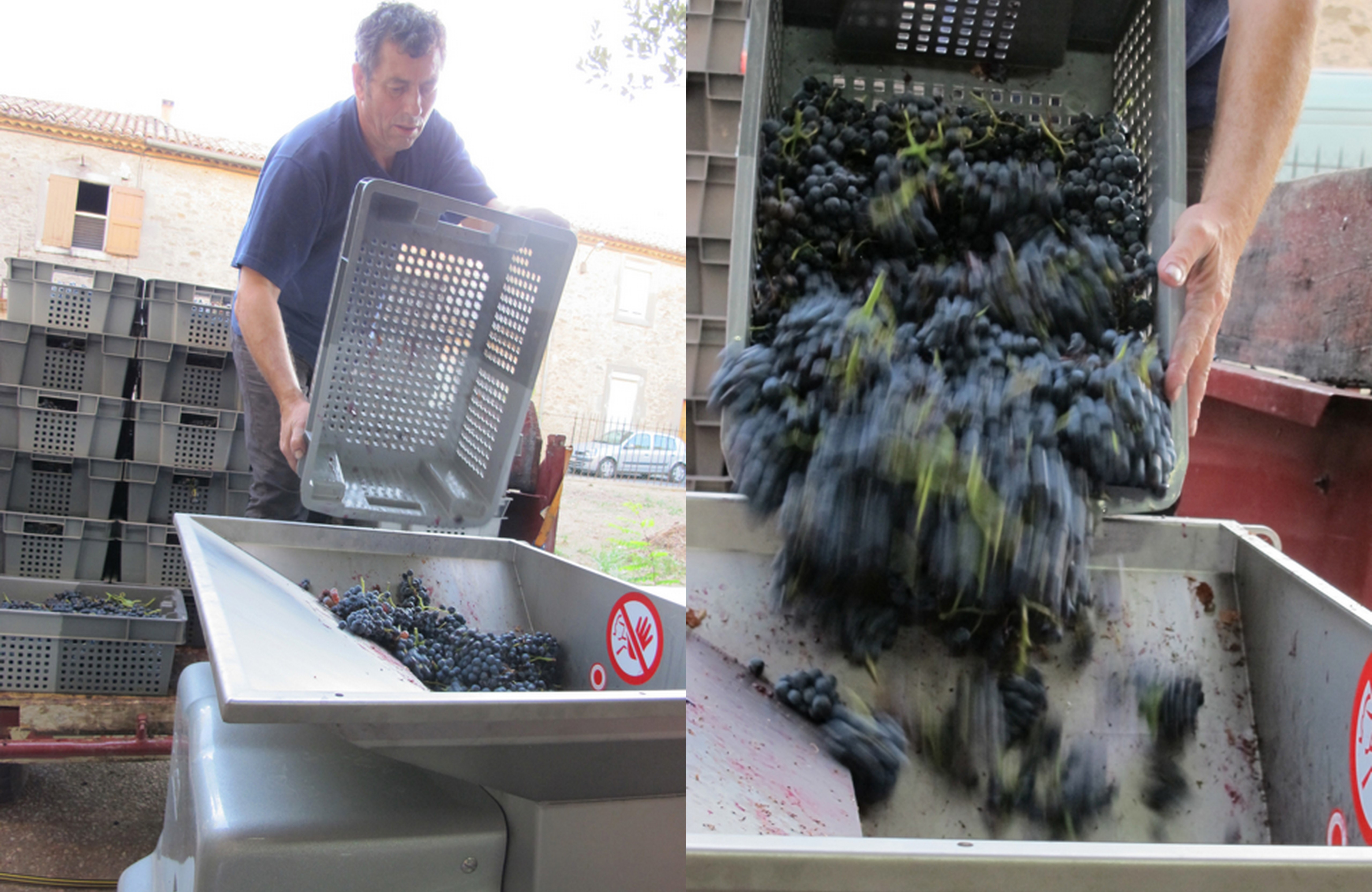


The grapes were carefully emptied from their ‘caisses’ (box/basket) one by one into the de-stemmer/crusher (yes, it does what it says, plucks the berries from their stems and sorts away the leaves) which then drops the glistening little purple ‘beads’ (they look like jewellery) onto the sorting tray. They are dropped down into another tray, with a huge turning ‘screw’ and then pumped up through the red hose, straight into the tank. Some of the grapes were collected into buckets and emptied directly into wine barrels (second-hand, so not full-blown wood influences on the juice). A small experiment to develop different flavours.
If the wine is as delicious as the berries tasted, everyone will be happy!…




…Umm, here we go again! For those of you who saw this as a ‘mini-post’ a few hours ago, you must have been thinking ‘so where the heck is that recipe then?’. Well, I was in a hurry to pick up our child from school and WHOOPS pressed the ‘publish’ button instead of ‘save draft’. I’ll give it another try.
As for the spelling …well yes, I checked in the cookbook. It’s one of those words, like ‘rhythm’ or ‘Mediterranean’… I always have to think twice about it or look it up!
So here is my version of a ‘Rattatooey’ (that’s how I pronounce it, causing grimaces all round I’m sure) – a very traditional French dish that for me, unlike any other dish, evokes Summer in the South. The colours of the ingredients are sublime and just thinking about cooking it conjures up images of potagers (vegetable patches), big cast-iron casserole pots simmering on country kitchen stoves, lashings of fresh basil and chilled French wines. Many households are cooking up this dish right now and on my visits to friends’ houses I love nothing more than peeking into their pots to see what theirs look like. Vegies cut big or small? Diced or sliced?? Oily, not so oily? Fresh tomotoes, tinned?
I say ‘my’ version as yes, there are many. The ingredients are almost always the same, but the cooking methods differ. I’m a little embarrassed admitting that mine has conserved tomatoes in it instead of fresh, but it has. A good friend of ours came to stay this Summer (more of him in later posts) and being the most wonderful cook he is (and being French, I must also add) I was eager to get his opinion on what the ‘correct’ way to prepare this is. Strike out! He insisted the tomatoes had to be fresh. Ohh, I thought to myself, now I feel unworthy. Oh well. It’s always tasted good to us and what’s the point in arguing with this Frenchman, whose opinions on cooking and wine I admire so much.
I should add that my two of my favourite references for cooking are Stephanie Alexander’s ‘The Cook’s Companion’ and Susan Herrmann Loomis’s ‘French Farmhouse Cookbook’ and I first accessed this recipe from their reassuring pages. They were both wedding presents and how many times did I think to myself in those early days as a mute-non-speaking the local language-housewife with her apron – ‘where wold I be with out you??!??’ Well I must say that neither of their versions use conserve/ tinned tomatoes either!
Our friend did have a little extra advice for me too. On his departure, he mentioned that during the vintage I should be preparing many good meals for my husband, be kind and – with a wink – be a ‘bonne femme’. What did he mean? Did he really mean the housewife variety relegated to her stove or being simply good to Him? In the kitchen, elsewhere? (now don’t go there…). Mais merci, I’ll take that on board.
Incidentally, in French, ‘bonne femme’ could be either ‘good woman’ or ‘good wife’ – it’s the same term for both. For the blokes however, there’s no such confusion as husband has its own word – ‘mari’.
I’m beginning to think we’re all destined to be good housewives here! (in the countryside anyway, if not the towns).
Anyway, here’s my recipe, minus the fresh tomatoes, from one Bonne Femme to you!
With these quantities, you can serve this to 6-8 people and still have left-overs.
This is one of those dishes that just gets better and better on the second and third days. Ideally, I make this the night before serving.
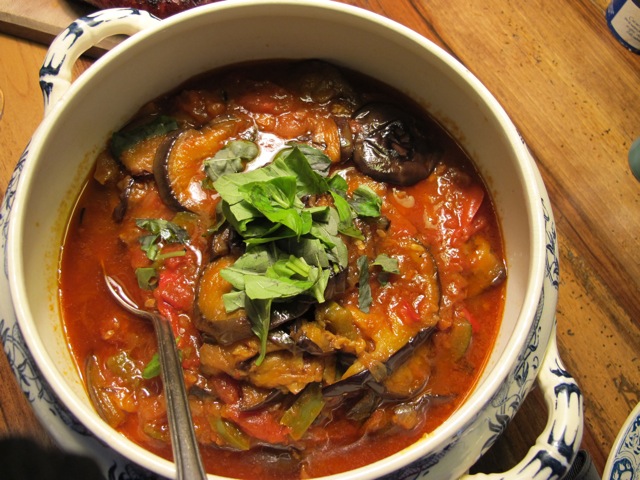
Ingredients:
(I change my portions each time, according to how it looks in the pot, so these quantities can be varied according to your taste)
4-5 medium onions, sliced (I love them!)
5 cloves garlic, finely chopped
4 eggplants, sliced
8 zucchinis, sliced to 1cm thickness
3-4 capsicums (that is, peppers or poivrons, depending on your country!) – green, yellow and red, seeded and sliced
1 x 690g bottle crushed tomato pulp (you may not want to pour all of it in)
2 x 800g tin tomatoes
salt, pepper
olive oil, sunflower oil for frying
chopped parsley and torn basil
method:
Cut the eggplant into 1cm (or finer if you like) slices, place the slices in layers on a large tray, sprinkling salt over each layer. Cover with tin foil, weigh down with a heavy book and leave for one hour.
Heat up a generous amount of oil in a large cast-iron casserole/ heavy-bottomed pot and fry the onions over medium-low heat until soft and golden.
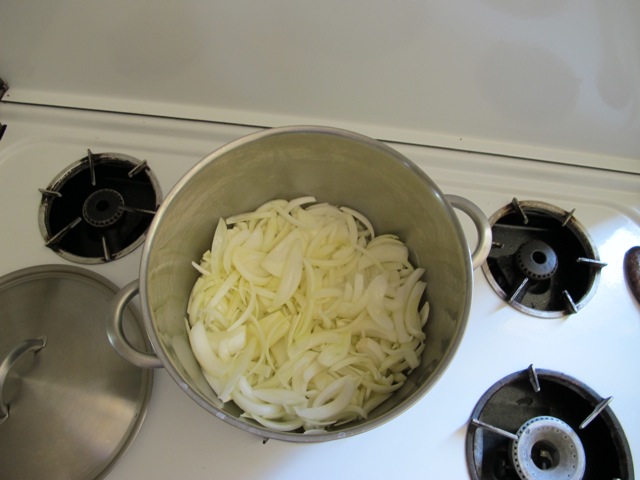
While the onions are frying, seed and chop capsicums, chop zucchinis, chop garlic.

As the onions become soft and golden, add the capsicum and the garlic and stir well. Increase heat to medium-high, stirring frequently to mix the ingredients.
Lower heat, cover with lid. Cook for further 15 minutes.
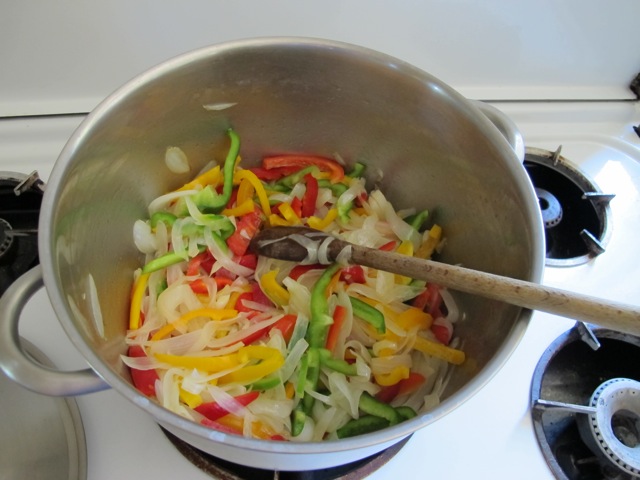
During this time, rinse the eggplant slices, drain through a colander and pat dry with tea towels.
Prepare one or two fry pans for shallow frying eggplants with generous amount of blended olive oil/ sunflower oil in each.
Stir in the tomatoes into the pot.

Stir in zucchinis to the pot, add freshly ground pepper and continue simmering with lid on.
Over a high heat (watch that the oil doesn’t burn) fry the eggplant slices until golden, re-adding oils to the pan/s regularly. This step is one of the most time-consuming in this recipe, but I really think it makes a difference to the dish. Once slices are cooked, I lay them aside on paper towels on a large tray.
Please note: I don’t salt the pot until I’ve tasted it with the eggplant added – even if the eggplants have been well-rinsed there can be a residue of salt.
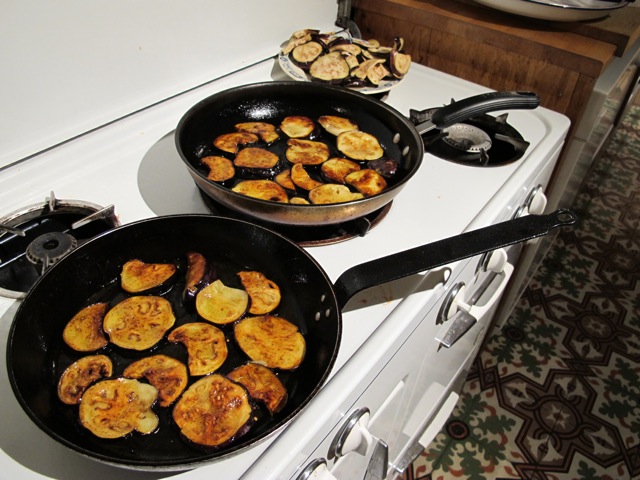
Once all the eggplant slices have been fried, I add them to the pot, taste for salt and then re-cover and leave simmering for another 20 minutes.
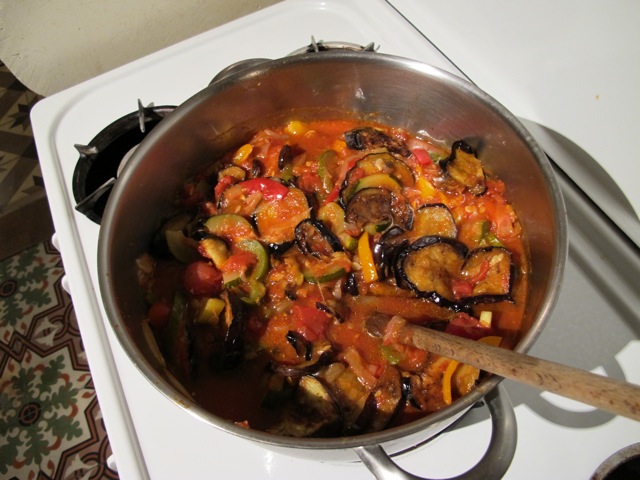
Serve cold, warm or hot the next day with torn basil leaves and freshly chopped parsley.
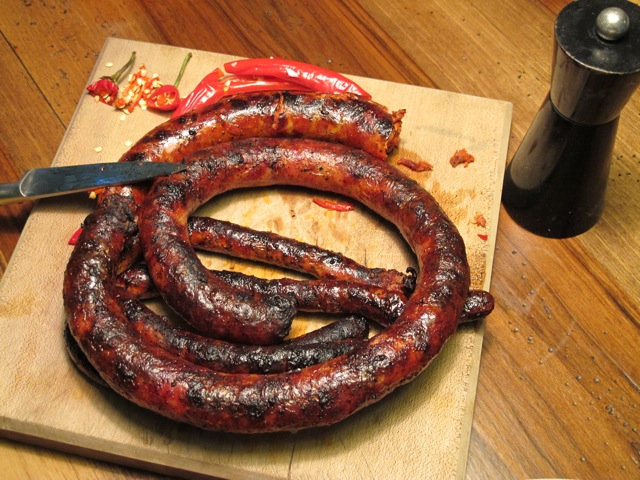
This is a great side dish for bbq’d meats – especially lamb. It also goes very well with country sausages.
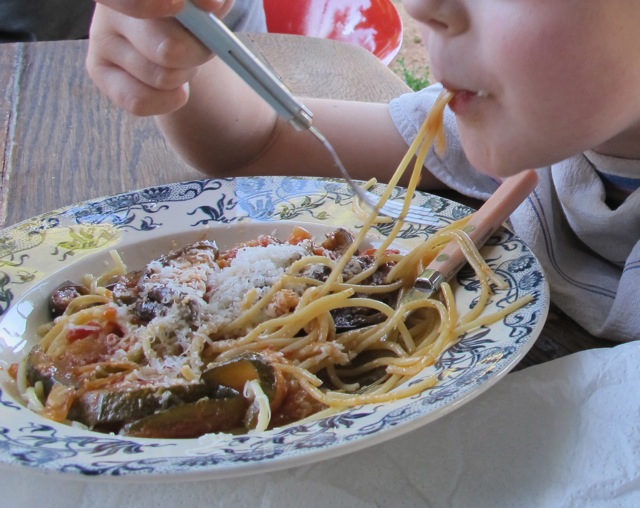
We also enjoy serving left-over ratatouille as a pizza base or tossed through pasta – it’s a delicious mix with spaghetti or fettuccine, sprinkled with basil and parmesan.
It’s a great way to get Lilas to eat her vegies!
 The Vigneron's Wife