Gratin d’Endives au Jambon

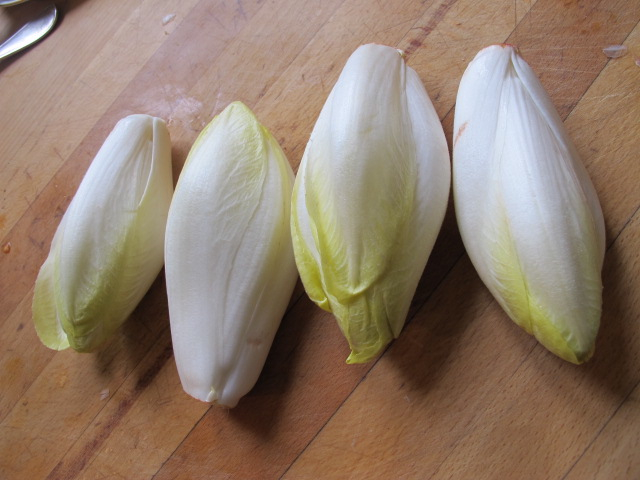
Endives
Witlof, Chicory, Endive… also known as the ‘Pearl of the North’ in France

‘Witlof’, ‘Chicory’, ‘Chicon’, ‘Endive’, ‘Belgian Endive’… I’m never quite sure what to call this vegetable.  Each country seems to have a different name for it.  In Australia for example, we call it ‘witlof’?  Here in France it is called ‘endive’ and would you believe it has been grown commercially since only the 1930’s.

Whatever the name for it, since moving to France I have developed a huge liking for this interesting vegetable from the Chicory family.  Thanks to Benji and his mum, I was introduced to a beautiful new ingredient and a few recipes that are now  family favourites. Even our six-year-old loves eating them.

Endives are so verstile – they make a great salad when served raw with vinaigrette drizzled over it or, the particular family favourite, when braised with white wine and lardons and parsley, over a gentle heat for a few hours (the longer the better, you want them to caramelise!).  You can serve this dish on its own or it makes a great side dish to lamb chops, veal or pork.

During the first few weeks of us living back in Australia in 2004, I decided to prepare the family favourite for our  friends who we were lodging with.  I was so excited to share this newly-loved vegetable of mine.  After quite a search, I finally found them in a fruit and veg shop in North Fitzroy.  I filled the bag, enough for four people and when I went to pay I nearly fell over.  They were so expensive!  I concealed my shock and quietly paid the money, vowing never again to buy this vegie in this suburb again.  I at last appreciated why Claude (my Frenchie – amazing cook – friend who was living in Western Australia with his NZ wife), when he had yearnings for a good old endive dish, would only use three or four of them in a gratin.  Braising them en masse was a complete luxury.  Anyway – big sigh of relief – the dish worked out pretty well that evening, but not to be repeated for quite some time!

Here in France however, they are cheap and we eat them regularly, especially around October.  A few years ago, I had to prepare a lunch at the last minute for some friends of friends travelling through the area.  I added pan-fried chicken thigh fillets and julienned carrots to a pot of left-over braised endives and the result was really delicious.   One of our lunch guests, the owner of a well-known bakery in Melbourne (yeah, not much pressure), was keen to get the recipe.   High five!  I was tres contente.  I’ve been adding the chicken and the carrots for many a meal since.

But much to my husband’s relief (I’m someone that could eat the same dish 4 times in the one week if I like it), I’ve branched out and tried a new recipe  – the traditional ‘Gratin d’Endives au Jambon’ (Endives and Ham Gratin).  Once again, as is usual for all the recipes I prepare, this is pretty simple and easy to make.  It is a particularly good dish for the Autumn-Winter months and with today’s maximum temperature reaching six degrees celsius, I think I should get to it and make some.

Here’s the recipe for you…  (I should tell Claude I’ve finally made it)

Gratin d’Endives au Jambon (serves 6)
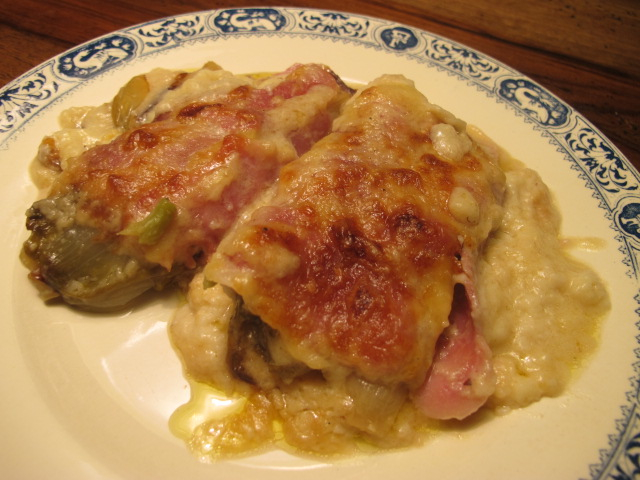
Gratin d'Endives
Gratin d’Endives

ingredients:

(note:  my quantities are always on the generous side – I prefer to have left-overs than not enough!)

8-10 endives (depending on size)

8 slices ham

60g butter

60g plain flour

200g Swiss Gruyere, grated (the AOC Gruyere ‘Alpage’ or ‘Reserve’ are incredible! – and even available in Australia)

1 litre full cream milk

salt, pepper

olive oil

method:

Trim stems off endives, pull off any discoloured leaves, then cut in half (I do this to help with cooking them through and browning)

Fry the endives in a pan over a low-medium heat with a little olive oil.  As they begin to brown (or burn!), you can pour in a small amount of white wine to keep the pan moist.  Fry until golden/dark golden and moisture has evaporated

(NB: some like to steam or boil the endives to part cook them but I prefer to fry them as I find there is too much liquid in the baking dish later when serving)

+ Heat oven to 180 degrees Celsius (about 7 or 8 on my gas oven) +

endive 1
Fry the endives until golden

While the endives are cooking, prepare the cheese sauce (I like to grate the cheese before beginning the sauce so that your hands are free to keep stirring – and ready to be added when needed)

endives 2
While the endives are cooking, prepare the cheese sauce

Melt butter in large saucepan

Heat milk in a different saucepan (it helps reduce overall cooking time if the milk is warm)

Stir in flour with a wooden spoon and cook for a few minutes over a gentle heat, stirring continuously.

Once it becomes a golden paste, pour in heated milk gradually, stirring continuously

(NB: How much milk you add depends on how thick or thin you like your sauce – my husband likes it thin and runny but I like it thickish and runny – so you may want to use less or more than the 1 litre.  Just remember it will thicken over the heat eventually!)

add salt, pepper to taste

Once it comes to the boil, add the cheese and stir until melted.

Remove from heat.

Oil a large gratin/ baking dish

Gather your endive halves, wrapping two halves inside each slice of ham (as though it’s a whole endive)

Place them in the baking dish and pour cheese sauce over the top – add a little extra grated Gruyere if desired
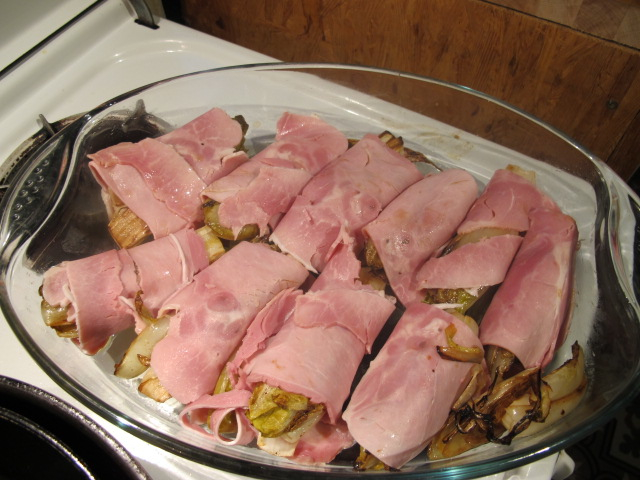
endives 3
Place the wrapped endives in an oiled gratin/baking dish.
(there’s 10 and not 8 in this one)
endive 4
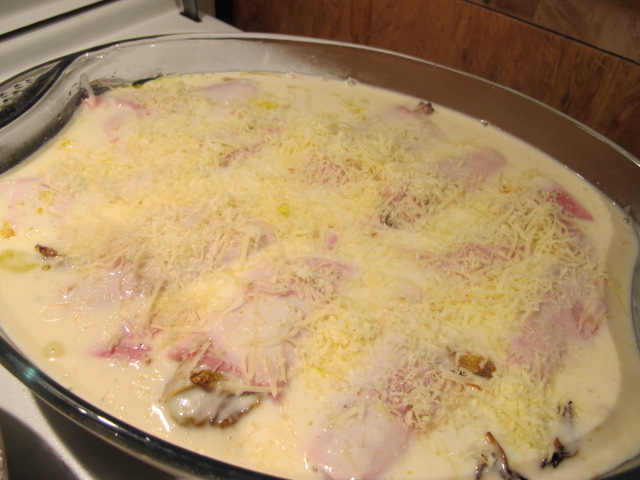
Pour the cheese sauce over the endives and sprinkle with grated Gruyere

Bake for about 30 minutes or until golden

et Voila!
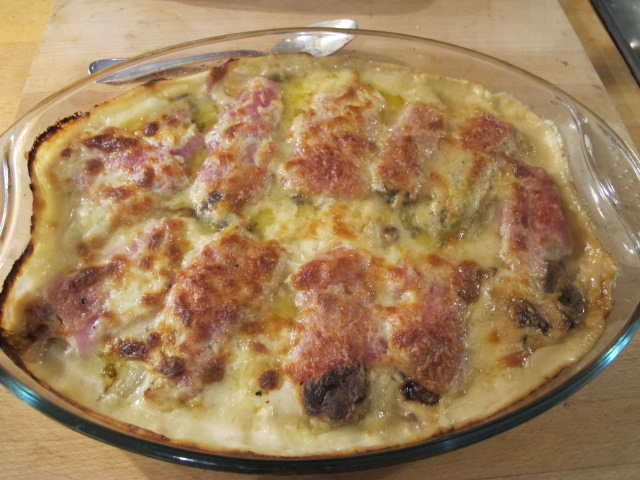
endive 6
Ready to serve

at last… my folks came to town!

the aussies came to town
a visit …all the way from home

They came, they saw, we drank – woohooey!

It was meant to have been a BIG surprise, but in the end we knew.  But that didn’t change ANYTHING in the way of how excited I was to have my parents – for the first time in 12 years!!- come and visit us.

My lovely brother had tried as hard as he could to keep it a surprise until the very last but, with all sorts of things popping up on his end and ours,  had to tell us that he was heading our way with two of his kids and da da da daaaa…  Ma and Pop in tow!

Since we moved here 14 years ago I’ve been enormously lucky to have had so many friends and family stay – and each time is so special as you get to enjoy each person on their own and usually over an extended time (hey, this is no quick side trip on the itinerary – if you’re going to travel from one side of the world to the other you’d better make it a decent trip!).  I adore going back to see everyone in Oz, but it can get hectic trying desparately to catch up with everyone at once.  This way, when people come to stay on our turf, I can relish every minute of their company and not have to juggle with a social diary.

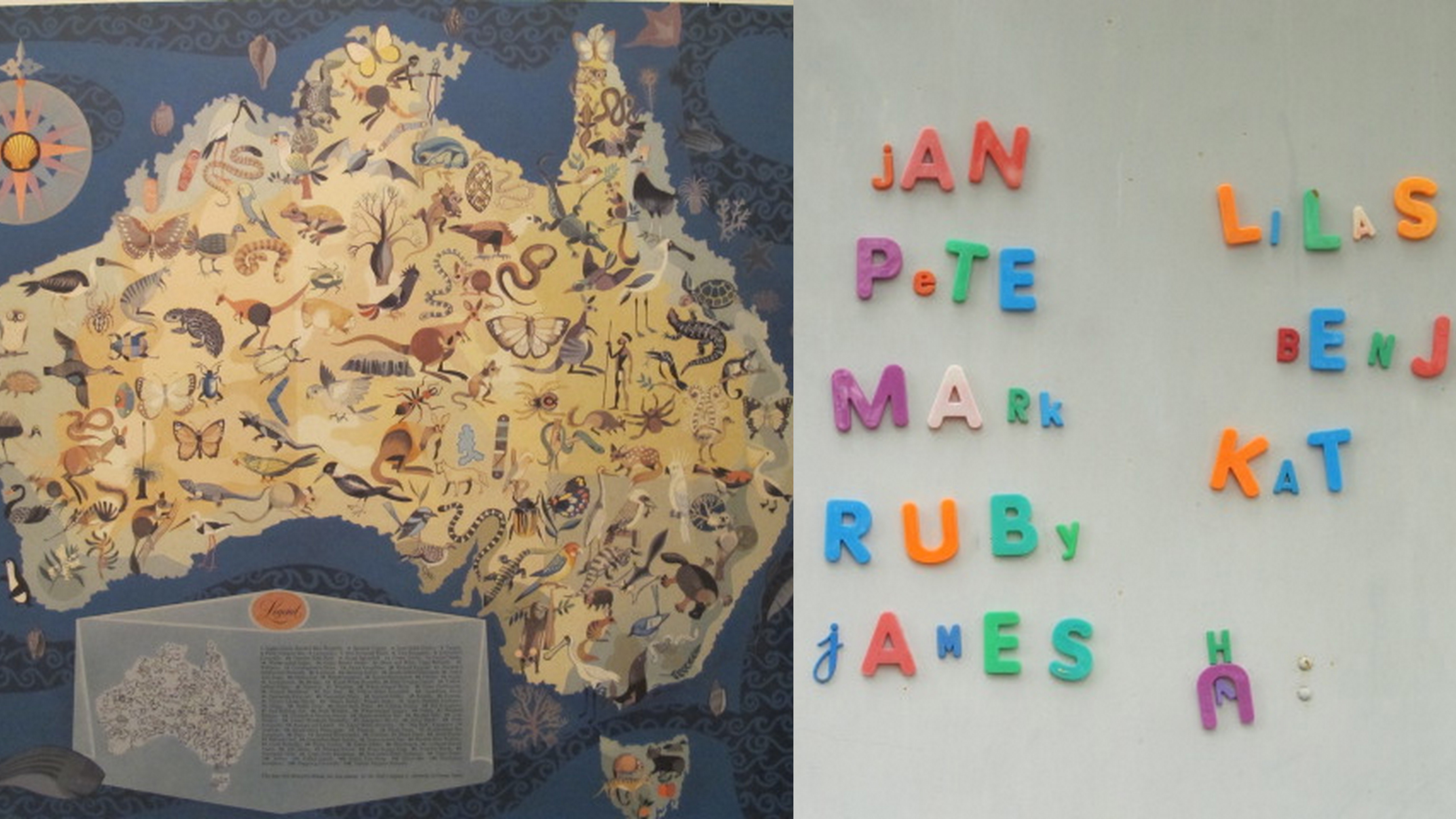
So this was Jan and Pete’s – and Mark, Ruby and James’s turn to finally drop their bags and hang out (in the home that my parents hadn’t seen until now!)

I took them to all the places they’d rememebered vividly from twelve years ago,  dined in a few lovely bistrots, cooked my favourite meals for them, introduced them to our mates and even snuck in a few drinking sessions, bien sur,  with Benji’s wines (yes I’ll make it clear you don’t drink the stuff Mum).

I can’t tell you how good it was to have everyone here at last.   I’m still smiling.  Thanks big bro Mark for making it happen!

ps – a word of warning!  there’s a few pics down below, sorry – but hell, this trip was twelve years in the making!

waking up on the first morning
the view on the first morning
lilas' classroom
showing Ma and Pop the classroom
La Cite - aka Kevin
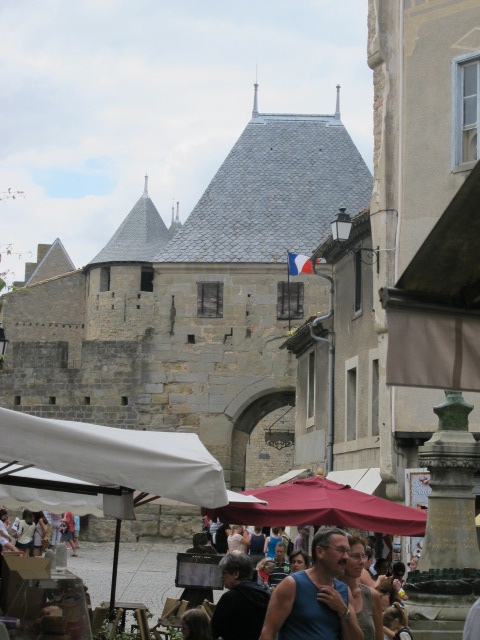
La Cite in Carcassonne – or ‘Kevin’ as we like to call it.
The original hill site dates back to the 6th Century BC, with the Romans fortifying the hilltop in 100 BC. The Visigoths claimed the land from the 5th and 6th centuries. It was held by various different leaders from the 11th century onwards and underwent a complete renovation in the 19th century.
the dunny
an elegant entry to the dunny
inside Kevin
inside Kevin
outside the Cite walls
outside Kevin
buying turkish delight
buying ‘Loukoum’ (Turkish Delight) at the Olonzac market
Acca Dacca rules
the Aussies at the Olonzac market – with a bit of Aussie culture thrown in
l'estagnol
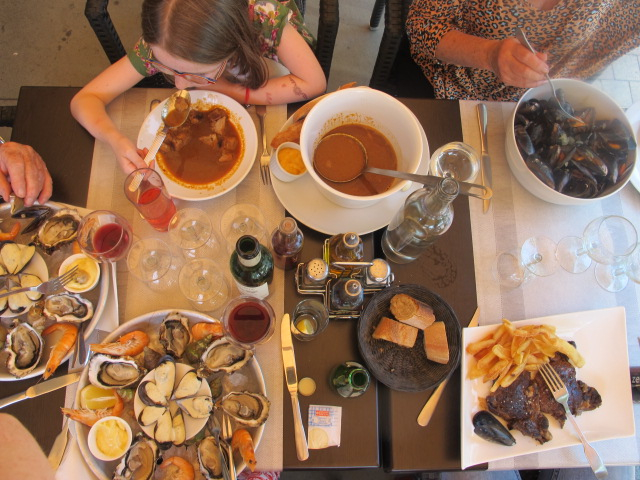
lunch at L’Estagnol in Narbonne
in the cloitre in Narbonne
after lunch stroll in ‘le cloitre’ (the cloister) of the Cathedral of ‘Saint Just et Saint Pasteur’ of Narbonne – built during the 14th and 15th centuries
view from le cloitre
view from le cloitre (cloister)
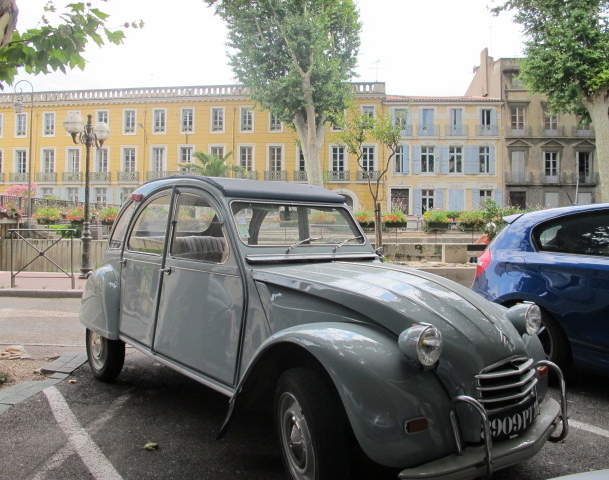
2CV in Narbonne
a happier Citroen 2CV in Narbonne
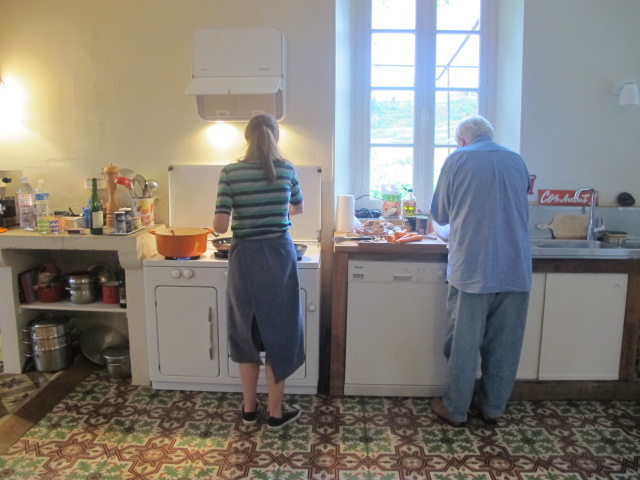
dad and junior at the stove
Dad and ‘Junior’ at the stove making the family favourite, Osso Buco (YES Phillip, one more time!!)
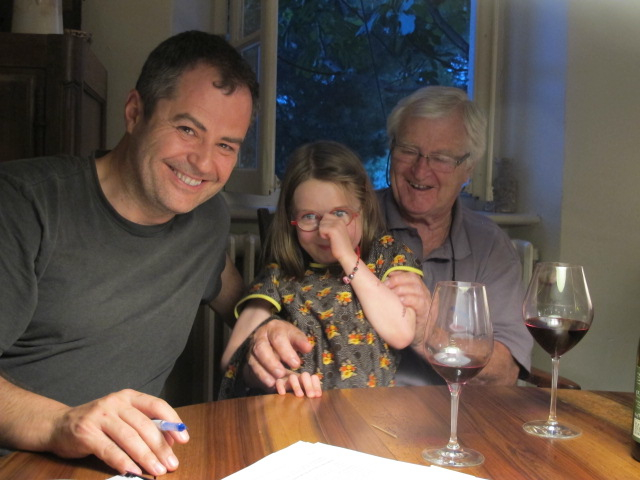
mark, lilas and pop
Mark, Lilas and Pop (keep working Mark)
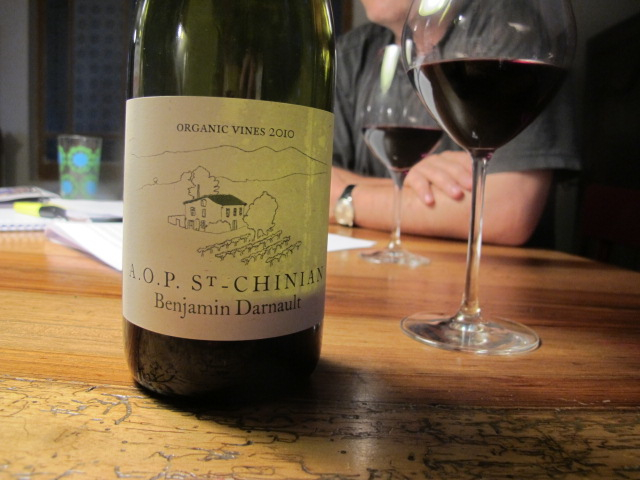
AOP St Chinian
Benji’s juice, Nicki’s artwork…
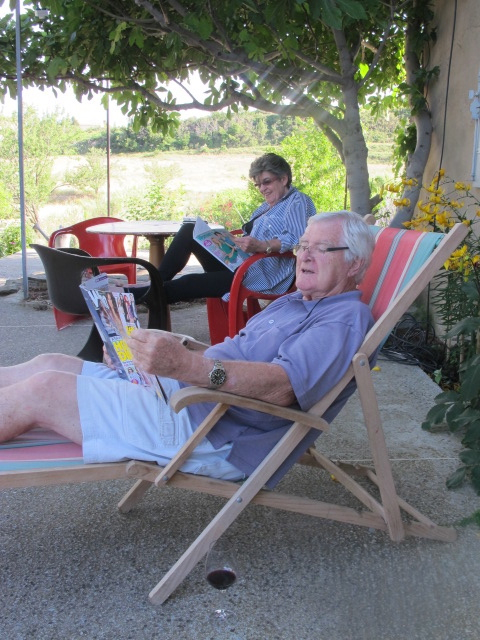
working hard
working hard on the terrace with Who and the Australian Woman’s Weekly, direct off the plane from Oz
going where?
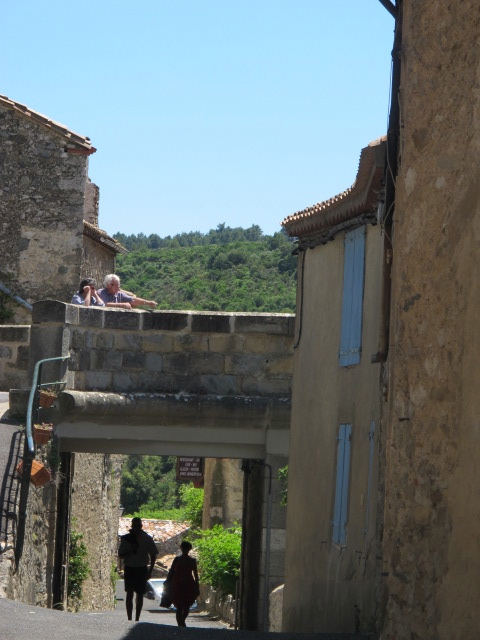
off to Minerve
minerve
Minerve – this fortified village is perched above the Brian and the Cesse rivers and earliest writings on it date back to the 9th century. It is famous for being a Cathar stronghold until the early 13th century.
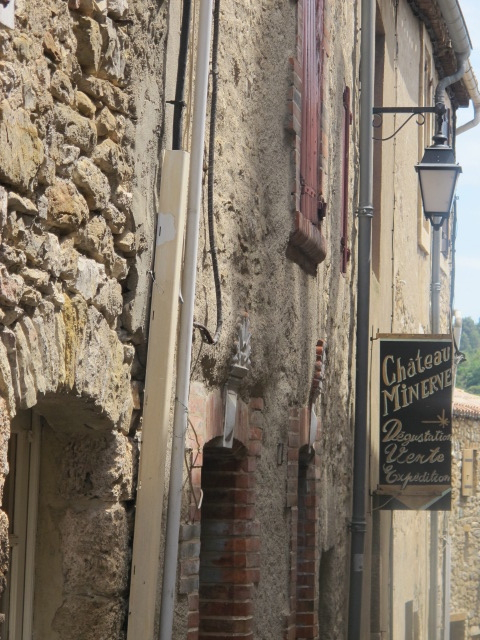
Chateau Minerve
Chateau Minerve
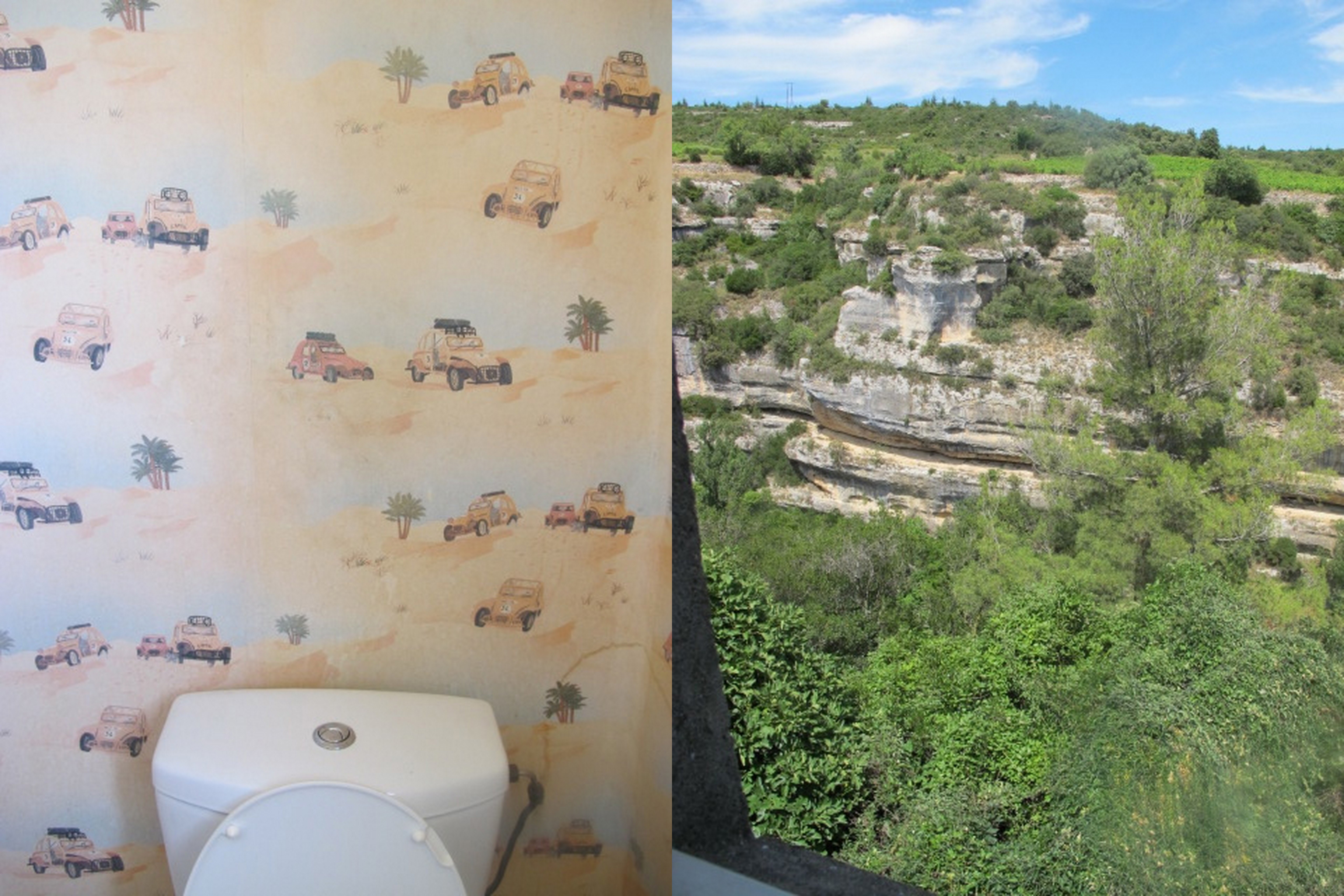
dunny view
one of the best views in Minerve – located from the cafe’s dunny.
Love the wallpaper
romeo and juliet on the bridge
Romeo and Juliet on the bridge
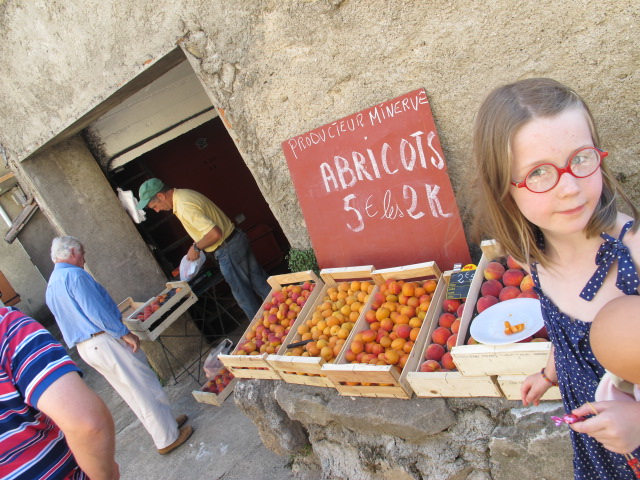
fruits of the season
a wine producer selling some other fruit!
swimming in Minerve
a great way to finish the visit… swimming in Minerve
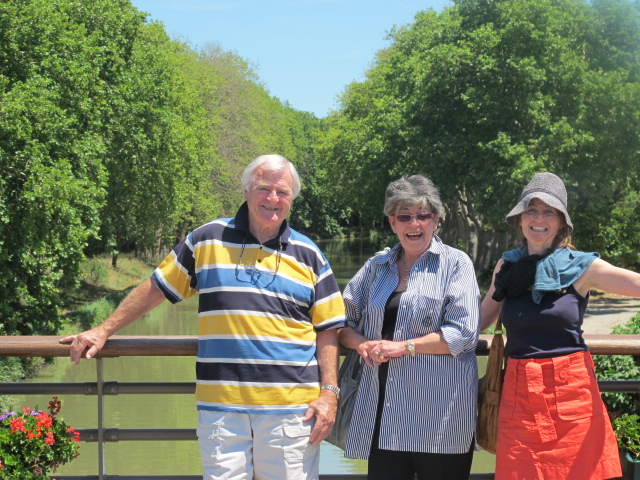
canal du midi
one of the folks’ faves, the Canal du Midi
family portrait
happy campers

The people in your neighbourhood #2 – The Night of the Snail Hunter

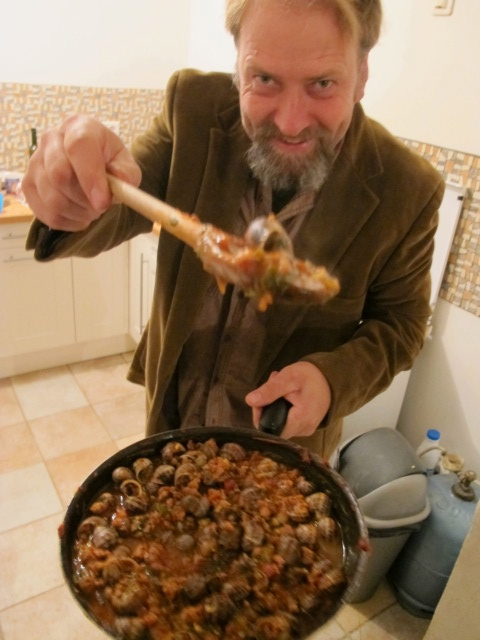
escargot man
l’homme des escargots

You don’t get to meet too many Aussies around here (that’s ‘Australian’ when talking Orstrayan)… it took me more than 10 years to meet this one.   Yes, there are quite a few foreigners around here – English, Dutch, New Zealander,  some Americans, Irish,Canadian – but not so many from where I’m from.

I’d always been told about ‘the other Aussie’ in the next village – “Vous ne connaissez pas Joff-wah?!?” (aka Geoffrey), they would exclaim.  No, I’d respond.  I hadn’t met ‘the other one’, even after many years of exploring Felines, a mere 3 km’s from us , I’d never set eyes on Joff-wah.  I’d been told I would have remembered if I’d met him.  And I now know why.

Meeting ‘Geoff’ (I’ll stay simple) finally happened via the lovely Evonne, who had recently moved in and become the third Aussie in our parts.  How wonderful to finally have some ‘mates’ from the other side of the world!!  I can’t tell you how reassuring it was to finally hear the word ‘dance’ rhyme with ‘ants’ and to hear news of a dawn meeting at Geoff’s to watch the AFL Grand Final of Australian Rules football.  Unheard of in the Minervois until now!  After all these years.  Geoff also has a French partner (divine Florence) who also works in wine, like mine – it’s mad we’d never met.

Now I should tell you that Geoff, as well as being token Aussie in his village, is also known as a damn fine snail catcher and cook.  It’s a big tradition around here and once these little slimy creatures come out in force after a big rain, you hear much talk amongst the locals of ‘cagaraula’ (‘snails’ in local Occitan).  Evonne had told me how good Geoff’s snails were and it was thanks to him that I got to try my third-ever*  meal of ‘les escargots’…

* (the first time was back in 1997 in Cape Town where Benji and I had recently eloped – long story and one that I will explain, later! –  and out dining with some Frenchies, I thought I should dip my toes into ‘their’ cuisine once and for all)

Geoff the Snail Hunter

http://youtu.be/PMhfsfkJAMk?hd=1

And what were they like?  Bloody good!!

the night of the snail hunter

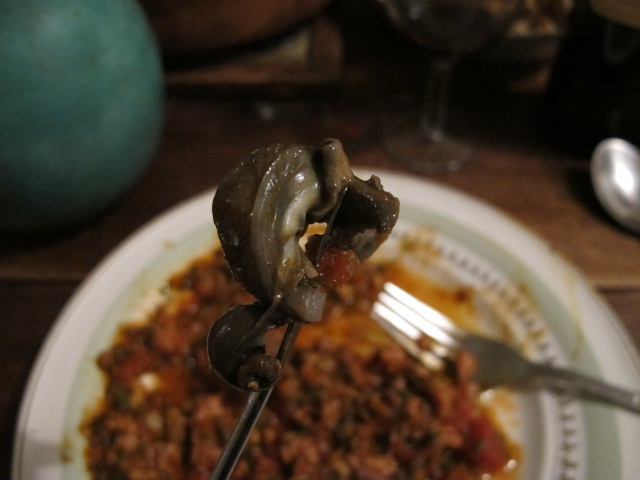
I must say I loved every bit of this dish.  A bit of tomato here, a lovely chunk of pork meat there, some snail flesh here…  It’s amazing how well the flavours merged and complemented each other.  I just didn’t want to stare at my fork for too long and wonder about where the big slimy chunks had grown up.

what is that?
what’s this slug on my fork?!??

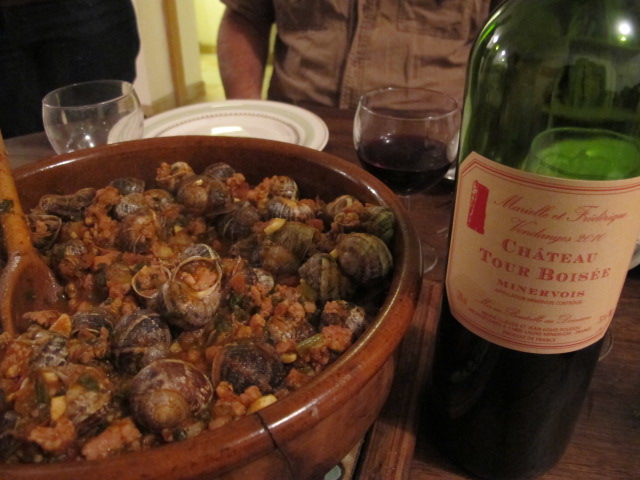
After beginning our evening with a yummy apero of La Tour Boisee white wine, the snails slid down deliciously with red.  Florence’s La Tour Boisee Minervois 2010 was a real treat.

snails and La Tour Boisee 2010 Minervois
Escargots a La Minervoise and La Tour Boisee 2010 Minervois red
I used to think that these creatures were torn from their outside homes, cleaned up a bit, thrown into a cook pot and then served swimming out of their shells in cream and garlic.  Not so simple!  Snail hunting and preparation is a carefully orchestrated, time-consuming passion.  I could give you my boring, textbook account of how Geoff prepares his snails, but I think the words of the Snail Hunter himself are far more interesting:
Snail Preparation
1. Once the snails are collected they are put into a bird’s cage.  Trapping the snails in a cage allows them to empty their stomachs from herbs or plants that could be poisonous to humans. So a period of starvation assures that you are not going to kill your friends after your dinner party. You can change their diet by feeding the snails with herbs, spices and salads that do not harm humans. Starving the snails makes them thinner and less earthy tasting. So this caging period is a tricky one and most Snailers have their method of doing it. Some other elements that determine the length and method of caging the snails are also the climate, type of cage and the location of the cage. It is a long process as you don’t want the snails to die of starvation, neither suicide from madness, or just simply close back up in their shell in hibernation. Consider the caging period of a snail like trapping the wine in a container. Wine is alive and its “caging period” between the vine to the table is felt at the time of digestion.  
The only time I put them in the bath tub or the kitchen sink is to clean them (I had been told the cage had sat in the family bath tub) – the “cleaning period”.  Depending on the amount of snails I have, I’ll use either the tub or the sink.
Cleaning the Snails
2.  Cleaning the snails comes before the time of death. You clean the snails after the caging period. Washing and sorting the snails is the biggest manual task of the cook. It can take up to three hours to clean them. You give them a good little scrub on their shell and try to make a last minute moose (frothing). Some sorry arsed Snailers throw little bit of vinegar on them to make them froth. I do this in very small amounts to the last of the snails that have not yet come out of their shell. Note: before the snails go into the pot for cooking you have to make sure that the snail can come out of its shell and that is not dead. Snails that die in the cage during the caging period either die from old age or unsupervised mismanagemant during the caging method. Do not include any snails that are dead or that haven’t cracked their bonnet after the cage !

How do they Die?

3.  The Time Of Death.  This is very delicate. Once the snails have been cleaned they are put into a large pot of COLD water and heated very slowly. As the water warms up the snails drift off to sleep and as the water gets hotter they die.

That was so delicious, so can we have the recipe?

4.  My recipe is not a secret. However I don’t go telling just anyone. Cooking snails takes years of practice. In this region a snailer is only able to cook snails about 4 to 6 times maximum per year. I do it about 4 times a year, depending on how much rainfall we get. This year will be my 9th snailing season.  I use fresh pork sausage meat.

Hmmn, I guess that means we can’t have it.

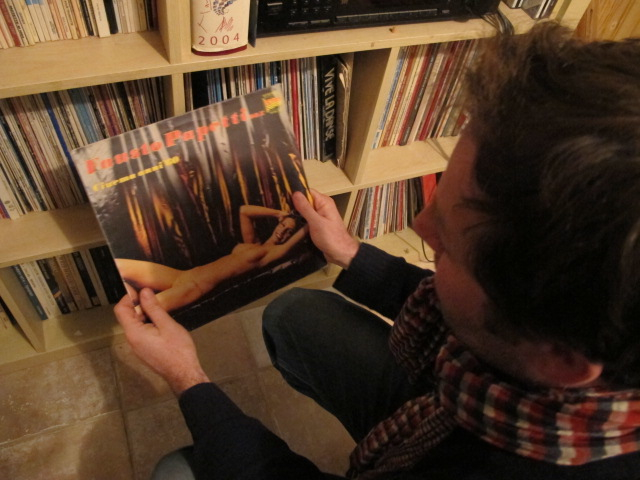
And no Benji, you can’t take home any of Florence’s family record collection!

snail music
a little light music to dine on snails by…

No recipe, no records, but a final word from the SH:

I think there is a village rule that does not allow snailing until around the 1st of May. Snail hunting season!  This is an old rule however and there is a blind eye towards it as there are not as many snailers as there used to be (Snailers: my word for them).  The most discreet way around this rule is to never talk about it, and if you do happen to go snailing in the off-season you should never brag about how many snails you got. 

Amongst the existing Snailers there is huge competition. You should never be seen on another snailer’s turf. I did make a slippery visit this morning to check the snail turf of Lily Marty just to see if a few snails had cracked their bonnet but there were none visible. While shifting around on her turf I felt like I was stealing scones from her kitchen window. I didn’t stay long as I didn’t want to be seen.  I do have my own snail turfs around the place which are not as good as the snail turfs of some of the older local Snailers, as some are a bit more complicated to access.

 The first major rain will bring out the big snails. Apparently we have just gone through the driest winter in one hundred years so I am not familiar with what state the hibernating little buggers will be in. I guess there will not be any major difference to the hibernation state of a snail from previous years but this is still unknown as there is not a living Snailer older than one hundred years to tell me. All I can imagine is that soon the snail hibernation will be ended by a big rain and snailing will be given the green light ! I love the smell of snails in the morning !

Thanks Geoff (and Florence and Evonne!), for your ‘Les Escargots a La Minervoise’.  From one Aussie to another, they and the evening were tres, tres bon!


still rockin’

check out those heels!

So what happened there?

France-Australia-France.  A few days stretched into a few months… and whammo I completely lost touch with blogging.  It wasn’t at all planned – and I didn’t realise how much I’d miss all of this.

Now I’m staying put right here and am so extremely keen to give you a glimpse of everything that keeps me ‘offline’!

It’s been a lot of fun, catching up with everyone back ‘home’ (my one of two) – long-overdue quality time with family and friends, Christmas, tasting Aussie wines, sampling Adelaide beaches, eating out Asian, English spoken all around me, dodging the sun, dodging the mozzies, listening to the magpies and cockies. And then the angst, the dreadful countdown and finally the tears at the airport.  But I am so lucky to have made it there.

…And I am very lucky to be happy here too.  Back into Winter, some snow!, back to the stove, back in my apron, hot foods to enjoy, snails to devour, red wine instead of all thse whites, vines being pruned,  back to the cleaning, back into walking the village with Mat, back to school, back to French!…  Now the flowers are out, Spring has sprung, the vines are budding, we’re nearing the end of the scary time for frost risk, Hollande is IN and Benji’s Picpoul is tasting mighty good in the sun!

Yep, the VW’s wife is back and I hope you are well!

The spring has come running back into my step – and I feel like the dancin’ lady clicking her pointy heels.  Phew.

december to may!

What the Aussie girl drank

some of the wines drunk

And this isn’t all of them.

‘Oh you’re her father’s girl!’ people always said while I was growing up.    My dad grew up in a country town and was one of ten, 8 boys and 2 girls.  He and his brothers played a lot of footy, took a lot of girls to the local dances (he met Mum at around this time) – and the band of brothers learnt the ways of the bottle pretty early on.  There are many parts of me that are Dad and they’re not all liquid-related  – but let’s just say there’s a tradition to uphold and an annual trip back to Australia requires some catching up.   Thankfully I’ve acquired a bit of Mum in me too in the last few years, but hey, it is Summer and it is once a year.

So yes, I think I am still officially Dad’s girl.

My delicious journey’s list will follow!